English
 Português
 русский
 Chinese
 French
 Japanese
 Spanish

What is a Chamfered Edge: Ultimate Guide for Stone, Concrete & Dekton Fabrication
2026-05-29 15:56:44
admin
Edge details ultimately define the success of your high-end architectural and interior design projects. When you fabricate premium materials, your clients expect flawless finishes. Therefore, understanding exactly what is a chamfered edge is critical for your daily operations. Simply put, a chamfered edge is a flat, angled cut that eliminates a sharp 90-degree corner. Usually cut at a 45-degree angle, this profile provides both structural protection and visual appeal.
However, achieving a perfect chamfer on materials like granite, marble, and Dekton requires precision. Consequently, you must utilize professional diamond edge profiling tools to prevent costly material damage. Let's explore how you can master this essential fabrication technique.

Chamfer vs. Bevel vs. Bullnose: What’s the Difference?
Fabricators often confuse different edge profiles. Knowing the exact difference ensures you deliver precisely what your clients specify. Below is a clear comparison to guide your machining choices.
Edge Profile Technical Definition Primary Application in Fabrication Chamfer A flat cut that only removes the sharp corner tip. Protecting edges from chipping; creating subtle, modern aesthetic lines. Bevel A sloped cut spanning the entire thickness of the material's side. Heavy aesthetic styling; altering the primary angle of the slab's face. Bullnose A completely rounded, semi-circular edge profile. Kitchen islands, stair treads, and traditional countertop designs.
Clearly, a chamfer focuses purely on breaking the sharp corner. In contrast, a bevel changes the entire edge geometry.
Why are Chamfered Edges Essential in Stone and Ceramic Processing?
You might wonder why a simple angled cut matters so much. Actually, cutting a chamfered edge provides massive functional benefits for your fabrication business.
Preventing Edge Chipping
Brittle materials easily crack. Specifically, when you handle Dekton or sintered stone, sharp 90-degree corners become liability points. A chamfered edge removes this fragile point. As a result, you drastically reduce chipping during factory transport, installation, and daily use.
Improving Safety
Sharp stone and concrete edges pose severe cut hazards. Therefore, you must break all sharp edges on commercial countertops, concrete flooring, and stair steps. A smooth chamfer protects the end-user while meeting strict building safety codes.
Enhancing Aesthetics and Jointing
Modern designs demand clean lines. A precise chamfer adds sophisticated visual weight to a slab. Furthermore, when you create V-groove joints or waterfall islands, a micro-chamfer ensures a seamless, professional transition between two joined slabs.
How to Create a Flawless Chamfer: Tools and Techniques
Creating a perfect chamfer requires a systematic approach. If you rush the process, you risk burning the stone or wearing out your tools prematurely. Follow this step-by-step guide to optimize your workflow.
Step 1: Rough Shaping. First, you must remove the bulk of the corner material. Use an aggressive metal-bond diamond router bit or cup wheel.
Step 2: Honing. Next, you smooth out the heavy scratches left by the shaping tool. Switch to a medium-grit resin diamond pad to refine the angled flat surface.
Step 3: Final Polishing. Finally, you restore the material's natural gloss. Apply high-grit polishing pads until the chamfer matches the shine of the main surface.
Processing ultra-hard ceramics and glass often causes standard tools to fail. Consequently, you need specialized Dekton chamfering diamond tools engineered to withstand high friction without burning the slab.
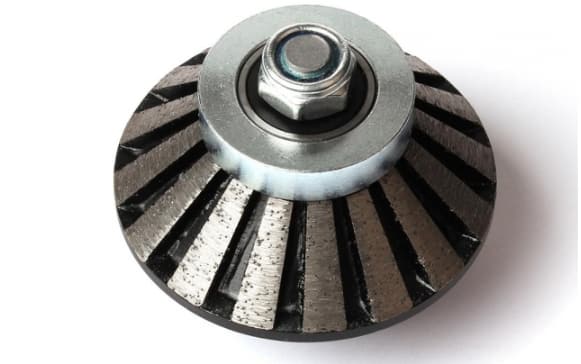
Z-LION’s Top Diamond Tools for Edge Profiling & Chamfering
To maximize your factory's output, you need industrial-grade consumables. Z-LION designs cutting-edge solutions specifically for hard stone and concrete fabrication.
CNC Profiling Wheels: These metal-bond wheels deliver extreme durability. They are ideal for high-volume, automated factory chamfering on granite and marble.
Diamond Polishing Pads: We offer premium dry and wet polishing pads. They flexibly adapt to your chamfered edge, ensuring a brilliant, mirror-like finish without color bleeding.
Dekton & Ceramic Specific Tools: Sintered stone requires unique tooling. We engineer customized resin and metal-bond formulas specifically to cut and chamfer Dekton cleanly, eliminating the risk of micro-fractures.
Why Partner with Z-LION?
Leadership begins with innovation. As a "New Third Board" listed enterprise in China, Z-LION offers unparalleled manufacturing strength and R&D capabilities. We do not just sell tools; we solve your fabrication bottlenecks.
Depending on your specific machinery, RPM, and stone hardness, we provide one-to-one customized B2B services. We gladly accept OEM/ODM orders. Furthermore, our website supports seven languages, and we invite you to experience our transparent manufacturing process through our 360° Panorama online factory tour.
Elevating Your Fabrication with the Right Chamfering Tools
Understanding what is a chamfered edge is only the first step. To execute it flawlessly on granite, concrete, or Dekton, you must equip your facility with superior diamond abrasives. High-quality tools reduce your material waste, speed up your production lines, and ensure your clients receive pristine countertops and tiles.
Are you ready to upgrade your edge profiling efficiency? Request a Quote today to explore our extensive catalog of professional diamond tools. If you have a highly specific material to cut, chat directly with our global sales team via WhatsApp, or email us at zhili@stone-tool.com for a fully customized manufacturing solution!