English
 Português
 русский
 Chinese
 French
 Japanese
 Spanish

Diamond Grinding Pads and Resin Grinding Pads: Ideal for Floor Grinding
2025-11-07 09:31:42
admin
In the field of floor grinding and polishing, the choice of grinding pad is crucial to achieving high-quality grinding results. Among the many options available, diamond grinding pads and resin grinding pads have become the preferred choice for professionals in the construction and renovation industries.
What Is a Diamond Grinding Pad?
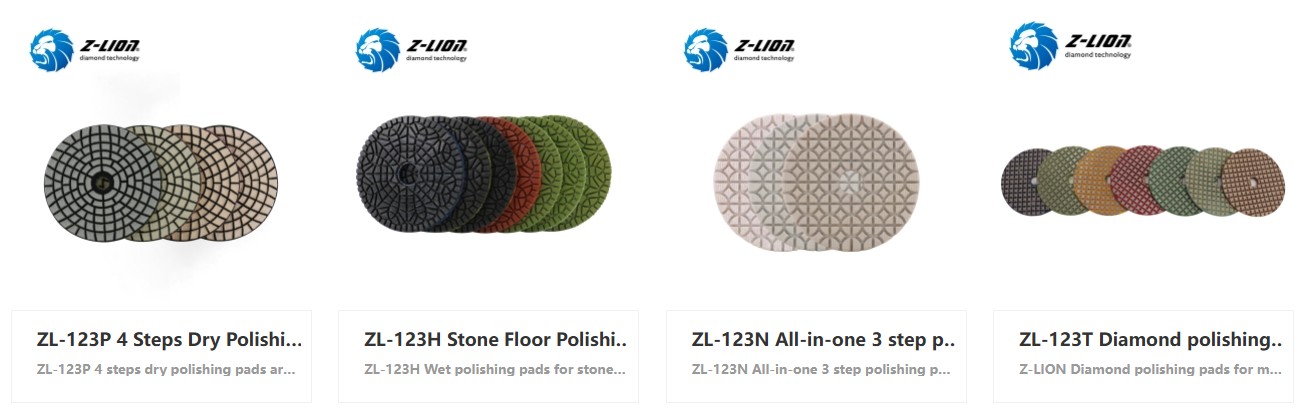
Diamond abrasive pads, also known as flexible diamond abrasive pads, are specialized tools that combine diamond abrasive with composite materials. These pads feature Velcro on the back for easy attachment to grinders and polishers. Their flexibility and durability make them suitable for processing a variety of materials, including ceramics, stone, glass, and floor tiles.
Advantages of Diamond Grinding Pads
Superior grinding capabilities: Diamond grinding pads are renowned for their superior grinding performance. The diamond abrasive embedded in the pad has excellent cutting force, enabling efficient material removal and surface finishing.
Multifunctionality: These abrasive pads can be used for a variety of purposes, including grinding marble, concrete, cement, terrazzo, microcrystalline glass, and floor tiles. Their versatility makes them suitable for both new flooring and renovation projects.
Multi-stage grinding: Diamond grinding pads are suitable for all stages of flooring installation, including coarse grinding, fine grinding, precision grinding, and polishing. This versatility ensures that flooring preparation and final finishing meet specific aesthetic and functional requirements.
Enhanced durability: The durability of diamond grinding pads enables them to withstand the harsh conditions of heavy-duty grinding applications. They maintain their effectiveness over long periods, reducing the need for frequent replacements and minimizing downtime.
Appearance and performance improvements: Floors treated with diamond abrasive pads are better able to withstand subsequent maintenance. This lays a solid foundation for the floor’s beauty and durability, ensuring its longevity.
Applications of Diamond Grinding Pads
Concrete slab curing and grinding: In industrial areas, logistics warehouses, and underground parking lots, diamond grinding pads demonstrate unique advantages. They can be flexibly used with handheld grinders or polishers, achieving coarse grinding, fine grinding, and polishing simply by changing the grit size. This adaptability ensures optimal grinding results for various floor types.
Granite, slate, and marble renovation: Diamond polishing pads excel at polishing and refinishing natural stone surfaces, including granite, slate, and marble floors and steps. They create a smooth surface while preserving the integrity of the stone, making them ideal for restoration projects.
Tile polishing: Diamond grinding pads for grinding and polishing tiles are available in a variety of finishes, including glossy and matte. The resulting surface gloss can exceed 90, making them ideal for working with microcrystalline tiles and a wide range of other ceramic tiles.
Processing of artificial stone: In the processing of artificial stone, marble, and granite, diamond grinding discs offer strict and standardized grit grading. They can be used for fine finishing of lines, bevels, curved slabs, and irregularly shaped stone, and offer the flexibility to select the shape, size, and grit required for various handheld grinders.
Features of Diamond Grinding Pads
1. Strict granularity classification
A key advantage of diamond grinding pads is their strict grit size classification. This classification allows users to select the appropriate pad for the specific grinding task, ensuring optimal performance. Grit size determines the coarseness of the grinding pad and directly affects the final grinding result. For example, finer grit is ideal for polishing, resulting in a high-gloss surface; while coarser grit is suitable for preliminary grinding and material removal.
2. Flexibility
Diamond grinding pads are designed to be flexible, allowing them to conform to various surfaces and shapes. This flexibility is particularly advantageous when processing uneven or irregularly shaped materials, such as natural stone or ceramic tile. The ability to adapt to different contours ensures a uniform and effective grinding process, resulting in a smoother surface.
3. Various shapes and sizes
Diamond grinding pads come in a wide variety of types, shapes, and sizes to suit a diverse range of applications. Whether you need a pad for grinding large concrete surfaces or a small pad for fine tile work, there’s a diamond grinding pad to meet your needs. This versatility allows contractors and craftspeople to easily handle a wide variety of projects.
4. Powerful grinding force
The unique combination of diamond abrasive and resin in these grinding pads provides powerful abrasive force. Diamond is one of the hardest materials known, meaning diamond grinding pads can effectively cut through hard materials such as concrete, granite, and marble. This powerful abrasive capability efficiently removes material and performs surface finishing, making them ideal for both initial grinding and final polishing.
5. Fast polishing speed and good gloss
Diamond polishing pads are renowned for their rapid polishing speed, significantly reducing the time required to achieve high-quality surface finishes. Their high efficiency allows projects to be completed quickly, making them a favorite among professionals. Furthermore, these pads produce excellent gloss, enhancing the aesthetics of the machined surface. A gloss level of 90 or higher can be achieved after polishing, making them ideal for applications with extremely high aesthetic requirements.
6. Excellent wear resistance
Durability is a key characteristic of diamond polishing pads. Their superior abrasion resistance ensures a long service life even under high-intensity use. This durability means users don’t need to replace polishing pads as frequently as with other types of polishing tools, thus saving costs. The exceptionally long service life of diamond polishing pads makes them a reliable choice for both commercial and residential applications.
7. No scratches or color residue
After polishing with diamond grinding pads, users can achieve a clean surface without any scratches or color residue left on the floor. This is especially important in applications where a high degree of surface finish is required, such as polishing concrete or high-end stone finishes. The ability to achieve a flawless surface without additional cleaning makes diamond grinding pads the preferred choice for many professionals.
Multiple Applications of Resin Polishing Pads
Applications of resin polishing pads
Stone polishing and beveling: Resin polishing pads are ideal for polishing natural stone such as granite, marble, and slate. They can also be used for beveling, creating smooth transitions between different surfaces. This application is essential for creating a sophisticated look for countertops, floors, and decorative stone.
Fine machining of curved panels and irregularly shaped panels: The flexibility of resin polishing pads allows them to adapt to various shapes and contours, making them ideal for fine polishing jobs. Whether processing curved slabs or irregularly shaped stone, these polishing pads deliver high-quality surface finishes that meet both aesthetic and functional requirements.
Repair and refurbishment of hard surfaces: Resin polishing pads excel at repairing and refinishing hard surfaces, including marble, concrete, and cement floors. They effectively remove scratches, stains, and surface imperfections, restoring the material to its original appearance.
Multi-stage grinding process: The polishing process using resin polishing pads typically involves five stages: coarse polishing, fine polishing, high-gloss polishing, and buffing. This systematic approach ensures a surface gloss level of 80 or higher, resulting in a beautiful surface finish.
Advantages of resin polishing pads
Affordable price: One of the most significant advantages of resin abrasive pads is their cost-effectiveness. They are generally more economical than metal abrasive pads, making them suitable for a wide range of projects without compromising quality.
Stone protection: The cushioning effect of resin polishing pads helps reduce the risk of scratching the stone during polishing. This protective property prevents irreparable damage and reduces the need for subsequent polishing pads, thus ensuring a smoother polishing process.
High-efficiency polishing: Resin polishing pads offer powerful abrasive action and fast polishing speed, resulting in superior gloss and durability. Their long lifespan makes them a reliable choice for professionals and DIY enthusiasts alike.
Scratch-free polishing: After grinding and polishing, the surface is free of scratches or color residue, maintaining a flawless appearance. This characteristic is especially important for high-exposure areas where aesthetics are paramount.
Disadvantages of resin polishing pads
Compared to metal pads, its abrasive ability is inferior: While resin abrasive pads are sharp and effective, their abrasive power is still inferior to that of metal abrasive discs. For heavy-duty work or machining particularly hard materials, metal abrasive pads may be more suitable.
Risk of breakage: Due to the properties of resin, when encountering significant elevation differences or high-speed operation, the grinding disc may violently collide with the sheared edges of the stone, leading to breakage. In such cases, it is recommended to consider using more durable grinding discs, such as diamond grinding wheels, to ensure reliability and performance.