English
 Português
 русский
 Chinese
 French
 Japanese
 Spanish

Jade Processing Art: Wire Cutting and Blade Cutting—Advantages, Disadvantages, and Practical Principles
2025-10-31 10:23:29
admin
Jade is highly prized for its beauty and cultural significance, and its processing, from mining to final polishing, involves a series of meticulous steps. Each step carries inherent risks, and improper handling can lead to substantial economic losses. Cutting is particularly crucial, as it directly determines the quality and value of the final product. Currently, the two most commonly used cutting methods in jade processing are wire cutting and knife cutting. This article will explore the advantages and disadvantages of these two methods and analyze their practical applications in depth.
Wire Cutting: Advantages and Technology
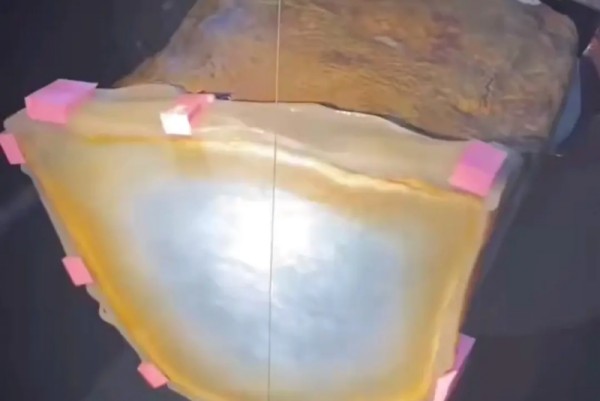
Wire cutting technology uses a reciprocating diamond wire to cut jade. This method has the following advantages:
Higher material utilization rate:
One of the major advantages of wire cutting is its ability to maximize material utilization. The tiny kerf produced by diamond wire cutting minimizes waste, allowing for more efficient use of precious jade. This is especially important in the jade industry, where jade is typically priced by weight.
Smoother, flatter cuts:
Wire cutting can produce extremely smooth and flat cuts, with cut widths typically on the millimeter level. This precision is crucial for high-quality jade artifacts because it reduces subsequent tedious processing steps and enhances the overall aesthetics of the final product.
Economical and efficient cutting method:
Wire cutting technology has relatively low cutting costs, especially considering the cost savings from reduced material waste. Furthermore, wire cutting supports the simultaneous processing of multiple workpieces, thereby increasing throughput and reducing processing time.
Safety features:
Wire cutting technology is typically designed with human-machine separation in mind, thereby improving operator safety. This design minimizes the risk of accidents that may occur due to direct contact with the cutting tool, making the operation safer for workers.
Suitable for valuable materials:
Given its precision and efficiency, wire cutting is particularly suitable for processing mid-to-high-end jade materials. It saves materials while achieving high-quality cutting results, perfectly meeting industry needs.
Blade Cutting: Advantages and Limitations
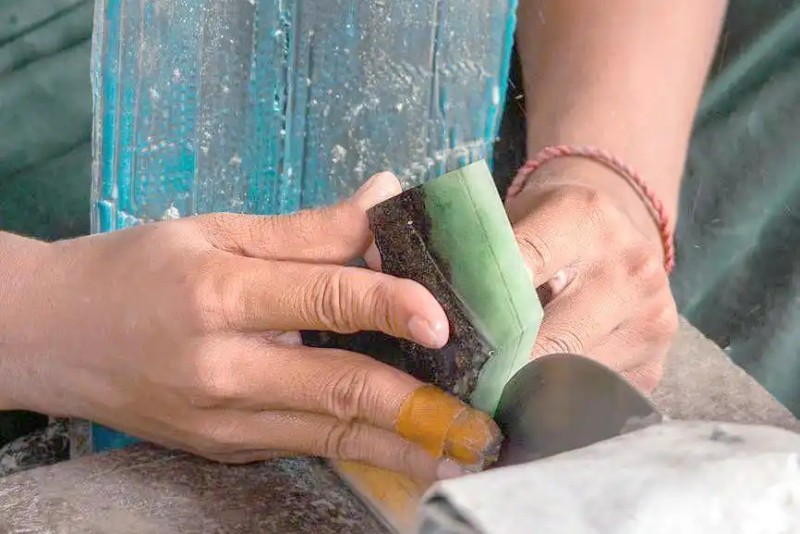
Another common method in jade processing is slab cutting, usually using waterjet or oiljet cutting. This method is known for its speed and moderate machine cost.
Advantages of blade cutting:
High cutting efficiency: Blade cutting is generally faster than wire cutting, making it suitable for large-scale operations where speed is critical.
Versatile applications: Blade cutting can be used for a variety of materials, not just jade. This versatility makes it a popular choice for workshops processing different types of stone.
Limitations of blade cutting:
Difficulty in achieving thin cuts: Cutting blade to meet stringent thickness requirements makes it difficult to produce extremely thin jade slices. This limitation can be a significant drawback in applications requiring extremely high precision.
Flatness and surface quality issues: It’s difficult to guarantee the flatness of the cut surface when cutting slabs, which can affect the final appearance of the jade. In contrast, wire cutting excels in achieving high-quality surface finishes.
Safety risks: There are certain safety risks associated with cutting jade slabs, including the possibility that the raw jade may crack during the cutting process, or that operators may be injured due to improper operation.
Vibration-induced cracking: Large vibration amplitudes during the cutting process can cause cracking, thus damaging the integrity of the jade. Furthermore, this method may limit the size of the jade that can be processed, making it unsuitable for larger pieces.
Four Principles of Jade Cutting
1. Protect colors
When processing jade containing colored components, extra care must be taken to avoid damaging the green or colored parts during the cutting process. The beauty of jade is often closely related to its color, and any damage will significantly reduce its value.
Practical applications:
Before beginning cutting, a cutter should carefully assess the jade to identify the areas with the most vibrant colors. By employing skillful cutting techniques and making efficient use of the material, a cutter can maximize the quality of the finished product. This not only enhances the visual appeal but also increases profits. Experienced cutters are crucial in this regard, as their knowledge helps them navigate the complex characteristics of colored jade.
2. Start with the worst part.
For those lacking experience in jade cutting, it is recommended to start cutting from the least desirable or lowest-quality part of the jade. This method has several advantages:
Practical applications:
By starting with the less valuable parts, cutters can reduce potential losses while accumulating valuable experience and skills. This method allows them to avoid damaging more valuable sections of the jade during their learning process. As their skills improve, cutters can gradually transition to more important areas of the jade.
3. Prioritize larger finished products
In jade carving, the size of the finished product is often closely related to its rarity and value. Therefore, while ensuring the quality of the jade, it is crucial to pursue the largest possible finished size.
Practical applications:
When cutting jade, prioritize making items in high demand in the market, such as bracelets. Leftover material can be used to make smaller ornaments or decorative pieces. For jade with many cracks, consider carving or shaping, as these types of pieces are generally more forgiving of flaws and still retain their value.
4. Dual-use principle
The principle of dual purpose emphasizes the importance of considering multiple potential outcomes during the cutting process. The cutter should always assess whether the same piece of jade can be used to create both a carved piece and a polished piece.
Practical applications:
By maintaining an open mind towards the final product, cutters can avoid unnecessary waste of high-quality jade material. If a polishing effect can be achieved without compromising the integrity of the jade, this method should be prioritized. This approach not only maximizes the use of the jade but also improves the overall profitability of the cutting operation.
In Conclusion
In conclusion, wire cutting and blade cutting each have their advantages and disadvantages in jade processing. Wire cutting excels in material utilization, precision, and safety, making it an ideal choice for high-end jade processing. While blade cutting is faster and more versatile, it may be slightly less effective in terms of thickness and surface quality. Ultimately, the choice of cutting method depends on the specific requirements of the project, the quality of the jade, and the workshop’s operational capabilities. By understanding the strengths and limitations of each method, jade processors can make informed decisions, thereby enhancing the quality and value of their products.