English
 Português
 русский
 Chinese
 French
 Japanese
 Spanish

Beveled Edge Countertop: Types, Pros and Cons, and Stone Finishing Tips
2026-10-30 16:07:52
admin
As a professional stone fabricator or contractor, you know that edge profiles define a project's final look. A beveled edge countertop remains a highly requested design for modern kitchens and commercial spaces. Therefore, mastering the selection and fabrication of this specific edge is crucial for your business. In this guide, we will explore beveled countertop edge types, compare profiles, and outline best practices for flawless stone finishing. If you want to improve your fabrication efficiency, understanding the right tools, like our premium diamond profile wheels, is the perfect starting point.
What Is a Beveled Edge Countertop?
What Does a Beveled Countertop Edge Look Like?
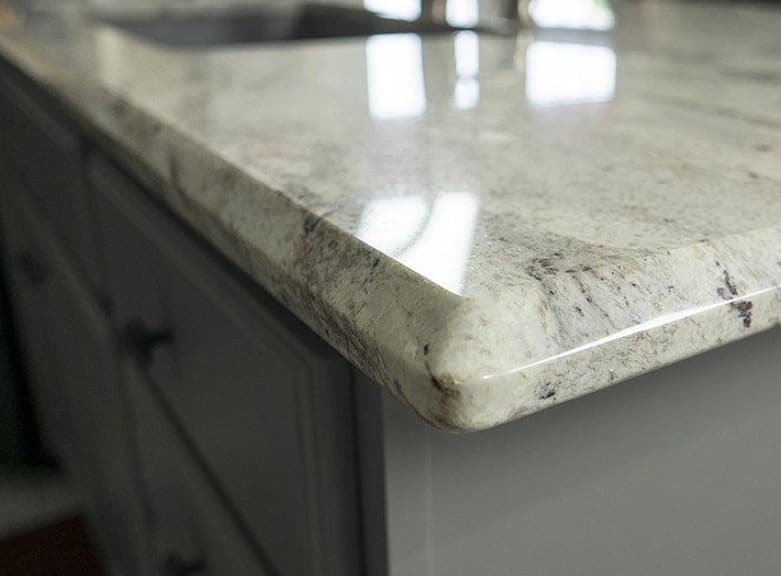
A beveled edge countertop features a distinctive, angled cut along the top edge of the stone. Fabricators remove the sharp 90-degree corner to create a flat, sloping surface. As a result, this profile adds strong geometric lines to the design. The angle catches light beautifully, making it a popular choice for contemporary aesthetics.
Common Bevel Angles and Widths
You can customize a beveled countertop edge to suit different design requirements. Fabricators typically adjust both the angle and the width of the cut.
Standard Bevel (1/4 inch): You cut a subtle 45-degree angle. This provides simple edge protection.
Half Bevel (1/2 inch): You create a more pronounced slope. This highlights the stone's pattern.
Extreme Bevel (1 inch or more): You cut a deep angle. This creates a bold, modern statement piece.
What Are the Pros and Cons of a Beveled Edge Countertop?
Benefits of a Beveled Edge
First, a beveled edge countertop prevents water from pooling on the surface. Spills naturally flow down the angled face. Second, the flat, angled cut makes the stone appear thicker and more substantial. Additionally, this profile complements modern cabinetry styles perfectly.
Potential Drawbacks: Chipping, Edge Wear, and Maintenance
However, the sharp bottom edge of a bevel can be susceptible to impact. Chairs or heavy pots can cause chipping if they hit the lower rim. Furthermore, liquid can sometimes drip down the slope onto the floor. As a result, homeowners must clean up spills quickly to prevent cabinet damage.
Which Countertop Materials Work Well with a Beveled Edge?
Beveled Edges on Granite and Quartzite
Hard, dense stones hold a beveled edge exceptionally well. When you evaluate how to bevel a granite countertop edge, you will find that granite resists chipping better than softer stones. Quartzite offers similar durability. Therefore, these materials are excellent for crisp, angled profiles.
Beveled Edges on Marble
Marble is significantly softer than granite. You can cut a beveled marble countertop easily, but the thin lower edge remains fragile. Consequently, you must advise clients about the higher risk of impact damage in high-traffic kitchens.
Beveled Edges on Engineered Quartz
Engineered quartz offers excellent consistency. You will rarely encounter fissures that cause blowout during cutting. Therefore, a beveled quartz countertop provides a uniform, highly durable edge that requires minimal long-term maintenance.
Beveled Edge vs. Eased Edge vs. Bullnose Edge
When clients ask for edge recommendations, you must explain the differences clearly. Use this quick comparison table to guide their choice.
Feature Beveled Edge Countertop Eased Edge Countertop Bullnose Edge Countertop Profile Shape Flat, angled cut (usually 45°) Slightly rounded top corner Fully rounded, semi-circle Aesthetic Modern, geometric, striking Clean, simple, minimalist Traditional, soft, classic Safety Sharp lower edge can catch Safe, slightly softened edges Safest option, no corners Fabrication Difficulty Moderate (precise angles) Easy (basic edge softening) High (full curve shaping)
Beveled Edge vs. Eased Edge
A beveled edge countertop vs eased edge countertop comparison comes down to visual impact. The eased edge simply softens the 90-degree corner. In contrast, the beveled edge creates a distinct, visible sloping facet.
Beveled Edge vs. Bullnose Edge
A beveled edge vs bullnose profile contrasts sharp geometry with smooth curves. Bullnose edges are fully rounded, making them very safe. However, a beveled edge countertop offers a much more contemporary, angular appearance.
Beveled Edge vs. Square Edge
A square edge leaves the sharp 90-degree corner intact. This increases the risk of both chipping and injury. Conversely, a beveled vs square edge countertop provides better impact resistance on the top edge while maintaining straight lines.
How Is a Beveled Edge Made on a Stone Countertop?
Measure and Mark the Bevel Angle and Width
First, you must establish exact guidelines. Use a specialized layout gauge to mark the bevel width on both the top surface and the edge face. Accurate marking ensures a consistent angle across the entire slab length.
Grind the Stone to Create an Even Beveled Surface
Next, you remove the bulk material. For maximum efficiency, utilize a CNC machine or an edge router equipped with a high-quality diamond profile wheel. This tool quickly shapes the raw 45-degree angle. Guide the machine steadily to prevent gouging the stone.
Smooth and Finish the Beveled Edge
After shaping, you must refine the surface. Progress through a sequence of diamond polishing pads. Start with a lower grit to remove tooling marks. Then, move to higher grits to match the factory finish of the countertop surface.
Using Electroplated Diamond Hand Pads for Manual Edge Refinement
Machine processing often leaves minor imperfections. Therefore, you will need to refine specific areas manually. Electroplated diamond hand pads are excellent for this task. Use these diamond hand pads for granite edge finishing to smooth out tight corners or correct slight angle deviations. However, remember that hand pads are for touch-ups, not for replacing the primary mechanical polishing sequence.
How to Prevent Chipping and Uneven Finishes on Beveled Stone Edges
Fabricating a flawless beveled edge countertop requires strict attention to detail. Follow this checklist to avoid common fabrication errors.
Choose the Right Abrasive for the Stone Material
Always match the bond hardness of your diamond tools to the stone. Use softer bonds for hard stones like granite. Conversely, use harder bonds for abrasive materials like concrete or marble. This prevents the tool from glazing over or wearing out prematurely.
Maintain a Consistent Bevel Angle and Grinding Pressure
Uneven pressure creates a wavy bevel. Always keep your grinder or router perfectly flat against the guide rail. Let the diamond abrasives do the work. Do not force the tool into the stone.
Progress Through Suitable Grits Before Final Polishing
Never skip grit levels during the polishing phase. If you jump from a 50-grit directly to a 200-grit pad, you will leave deep scratches behind. Consequently, your final polish will look cloudy and unprofessional.
Elevate Your Edge Finishing with Professional Tools
A perfectly executed beveled edge countertop showcases your expertise as a stone fabricator. By understanding the optimal bevel angles, selecting the right stone, and following strict finishing protocols, you deliver superior results to your clients. Consistent quality relies on high-performance diamond tools. From aggressive grinding wheels to precision electroplated hand pads, having the right abrasive makes all the difference. Are you ready to upgrade your fabrication process? Request a custom quote on our professional stone edge grinding tools today and experience the Z-Lion difference.
FAQs About Beveled Edge Countertops
Is a Beveled Edge the Same as a Chamfered Edge?
Yes, in the stone fabrication industry, professionals use these terms interchangeably. Both refer to an angled cut that removes the 90-degree corner of the countertop.
Does a Beveled Countertop Edge Chip Easily?
The top angled surface resists chipping well. However, the sharp bottom edge created by the bevel can be vulnerable to impact from heavy objects like chairs.
Can You Add a Beveled Edge to an Existing Stone Countertop?
Yes, an experienced stone fabricator can modify an existing square edge. However, this process creates significant dust and requires specialized edge routing tools on-site.
What Tools Are Needed to Finish a Beveled Stone Edge?
You typically need an edge router with a diamond profile wheel for shaping. Next, you use a sequence of resin diamond polishing pads. Finally, you utilize electroplated diamond hand pads for manual touch-ups.