English
 Português
 русский
 Chinese
 French
 Japanese
 Spanish

How to Profile Stone Edges: Tools and Step-by-Step Guide
2026-07-03 16:52:23
admin
Mastering the correct technique for stone edge profiling is a fundamental skill for any professional stone fabrication shop. When working with granite, marble, or engineered stone, the details of the edges ultimately determine the quality of your countertops and architectural components. Therefore, mastering this process directly reduces material waste and increases your profit margins.
To achieve perfect results, you must combine skilled techniques with high-quality diamond profiling wheels. Poor-quality tools can lead to chipped edges, excessive vibration, and costly rework. This guide will explain exactly how to tackle this task. Next, we’ll walk you through the necessary tools, step-by-step techniques, and troubleshooting methods to ensure you can shape stone edges consistently and precisely.
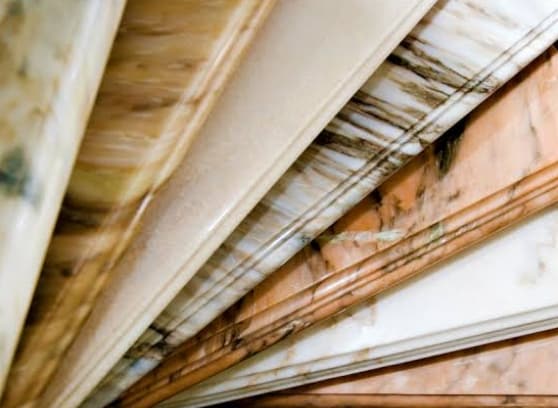
What is Stone Edge Profiling
Stone edge profiling is the complete process of mechanically shaping the raw, square edges of stone slabs into specific decorative or functional designs. Operators use specialized diamond abrasive tools to grind away excess material along the edges. As a result, this process eliminates sharp, dangerous edges and creates smooth, uniform transitions.
In addition, profiling enhances the structural strength of the stone. Compared to sharp 90-degree right angles, rounded or beveled edges are less prone to chipping. Ultimately, learning how to efficiently profile stone edges will enable you to offer your customers customized products with higher added value.
Common Stone Edge Profiles
Before you begin shaping stone edges, you must select the appropriate design for your project. Different applications require specific edge profiles in terms of both aesthetics and durability. Here is a comparison of the most common profiles you’ll encounter in your daily work:
Eased Edge: This profile slightly rounds off the sharp top corner. As a result, it presents a modern, clean look and is the most popular choice for standard countertops.
Half Bullnose: This design features a fully rounded top edge that drops vertically at the bottom. This helps water flow smoothly off the countertop.
Full Bullnose: This profile completely rounds both the top and bottom edges. As a result, it creates a very safe, classic look that is ideal for high-traffic areas.
Bevel: The fabricator cuts a precise 45-degree angle along the top edge. This creates a sharp, geometric aesthetic that perfectly reflects light.
Ogee: This elegant S-shaped curve is highly decorative. As a result, contractors often use it in high-end, traditional kitchen island projects.
Tools for Profiling Stone Edges
Achieving a perfect edge profile requires the right machinery and abrasive consumables. First, you’ll need a reliable power tool. Most fabrication shops use handheld stone edgers or variable-speed angle grinders.
For the actual cutting work, you must equip your tool with professional abrasives. Router bits and diamond wheels are key components in this process. Z-LION manufactures high-quality metal and resin tools specifically designed for efficient stone edge profiling. Our vacuum-brazed profiling wheels retain their shape over extended periods, ensuring a consistent profile across hundreds of feet of linear processing.
Step-by-Step Guide: How to Profile Stone Edges
A systematic understanding of how to profile stone edges ensures a safe working environment and a flawless surface finish. Follow this practical step-by-step guide to achieve the best results on your next stone slab.
Secure the Material: First, place the stone slab on a sturdy, level workbench. Use clamps to secure the material firmly to prevent any vibration or movement during grinding.
Install the Proper Tool: Next, mount your chosen diamond profiling wheel onto an edge trimmer or angle grinder. Ensure the tool is securely fastened and perfectly balanced.
Turn on the water supply (for wet cutting): If you’re using a wet-cutting tool, turn on the water supply. A steady flow of water cools the diamond segments and flushes away the slurry produced during grinding. This significantly extends the tool’s service life.
Make the First Pass: Start the machine and gently approach the stone. Keep the tool base flat against the stone surface. Smoothly guide the router from left to right, allowing the diamond grit to perform the cutting action.
Refine the Shape: Complete several consistent passes. Avoid applying excessive force. Instead, maintain a steady speed until the guide bearing of the grinding wheel rolls smoothly along the stone’s edge, indicating that the contour has been fully formed.
How to Avoid Chipping When Profiling Stone Edges
Even experienced professionals sometimes encounter edge chipping. When profiling stone edges, the slightest mistake can ruin an expensive slab. Use this troubleshooting checklist to prevent damage during the profiling process:
Never force the tool: Pushing the edging tool too aggressively can cause the diamond to tear the stone rather than grind it. Always maintain a slow, steady feed rate.
Use plenty of water: Overheating is the main cause of chipping. Therefore, when wet cutting, always use plenty of water to keep the tool cool and lubricated.
Check tool wear: A worn or unbalanced profiling wheel will cause severe vibration. You must regularly inspect diamond tools and replace them when they lose their original geometry.
Adjust the rotational speed (RPM): Operating the tool at the wrong speed generates excessive friction. Check the manufacturer’s recommended RPM for your specific diamond grinding wheel and the hardness of the stone.
Final Words
Mastering stone edge profiling can improve your finishing quality and meet the demands of even the most discerning clients. By understanding different profiles, selecting the right machinery, and following strict step-by-step procedures, you can eliminate chipping and reduce material waste.
Your technique depends on the tools you use. Z-LION Diamond Technology offers top-of-the-line, highly customized diamond tools designed to meet the rigorous demands of professional processing. If you need reliable, durable abrasives tailored to specific machinery and stone hardness, we are ready to assist you. Get a quote today for our customized profiling solutions to boost your workshop’s efficiency.
Frequently Asked Questions
What tool is best for stone edge profiling?
A handheld stone edging machine equipped with a high-quality, vacuum-brazed diamond profiling wheel is the best tool for this job. It offers exceptional stability and features built-in guide bearings to ensure a perfectly uniform profile.
Can you profile stone edges with a grinder?
Yes, you can use a variable-speed angle grinder equipped with a specific diamond profiling wheel. However, you must have a very steady hand, as angle grinders lack the flat, stable base found on dedicated stone router.
Do you profile before polishing?
Yes, you must thoroughly complete the edge profiling process before you begin polishing. Profiling establishes the initial shape, and the subsequent polishing uses diamond polishing pads with progressively finer grits to refine that shaped edge.
What is the easiest edge profile?
The eased edge is typically the easiest and fastest profile to machine. It only requires lightly rounding the sharp top corner of the stone, which demands less material removal and reduces the risk of complex errors.