English
 Português
 русский
 Chinese
 French
 Japanese
 Spanish

The Ultimate Guide to Diamond Fickert Abrasives
2026-06-25 16:39:07
admin
Are you struggling to balance abrasive consumption costs with premium high-gloss output on your stone slabs? The diamond fickert is the ultimate tool for modern automatic continuous polishing lines. Consequently, mastering this abrasive tool is essential for your factory's profitability. This comprehensive guide will help you understand the diamond fickert. Specifically, you will learn how to select the right bonds, optimize your machine settings, and troubleshoot common surface defects. If you want to increase your production efficiency immediately, you must carefully evaluate your current diamond fickert abrasives.
The Basics: Understanding Diamond Fickerts
To optimize your polishing line, you must first understand your tools. A diamond fickert is a highly efficient abrasive designed specifically for hard stone.
What is a Fickert Abrasive?
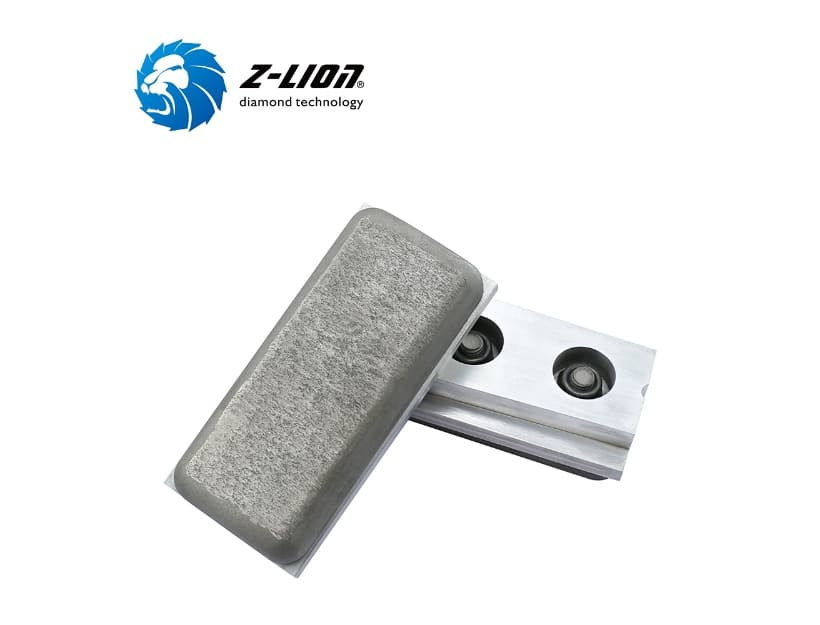
A diamond fickert is a long, rectangular abrasive block. Manufacturers typically produce them in standard lengths of 130mm, 140mm, or 170mm. You mount these blocks onto the grinding heads of automatic continuous polishing lines.
Fickert vs. Frankfurt
You might wonder about the difference between fickert and frankfurt abrasives. You use a fickert primarily on automatic line polishers for long slabs. In contrast, you use a frankfurt abrasive on radial arm machines or floor polishers. Furthermore, fickerts provide a larger contact area, making them ideal for high-speed industrial production.
Target Materials
You should use diamond fickerts for processing very hard materials. For example, they are the industry standard for granite, quartz, and engineered stone. These hard stones require aggressive cutting action.
Classification by Bond Type
You must choose the correct bond for each stage of your polishing process.
Metal Bond Fickerts
You use metal bond fickerts in the initial stages of your line. They offer high durability and aggressive material removal. Therefore, they are perfect for calibrating, leveling, and rough grinding rough stone surfaces.
Resin Bond Fickerts
Next, transition to resin bond fickerts. These feature a flexible matrix and finer diamond distribution. As a result, you use them in the middle and final stages for honing, smoothing, and achieving a mirror polish.
The Selection Guide: Matching the Right Formula to Your Stone
You cannot use a universal formula for all stones. Therefore, you must select the right diamond fickert specifications for your specific material.
The Golden Rule of Abrasives
Follow the golden rule of abrasives: "Use a soft bond for hard stone, and a hard bond for soft stone." When cutting hard granite, you need a soft metal matrix. This allows dull diamonds to fall away, exposing fresh, sharp diamonds. Conversely, a hard matrix prevents premature wear when cutting softer materials.
Designing the Perfect Grit Sequence
Arrange your grinding heads correctly to achieve a high gloss. Skipping grits will ruin your polish.
Step 1: The Coarse Stage (36# – 120#): Use metal bond diamond fickerts for scratch removal and leveling.
Step 2: The Medium Stage (220# – 800#): Transition to resin bonds for scratch refinement and color enhancement.
Step 3: The Polishing Stage (1500# – 3000# & Buff): Use ultra-fine resin fickerts to achieve the final mirror finish.
Structural Design and Geometry Considerations
You must also consider the physical design of the block.
Segmented vs. Continuous Block
Segmented fickerts provide higher pressure per square inch. Thus, they cut more aggressively. Meanwhile, continuous blocks offer a smoother finish and longer lifespan.
Water Grooves (Grooved Design)
Many fickerts feature water channels. These grooves evacuate stone chips quickly. Furthermore, they prevent heat buildup that can burn the resin bond.
Factory Floor Operations: Maximizing Lifespan and Output Quality
Even the best diamond fickert will fail if your machine settings are wrong. Therefore, you must control your operating parameters.
Pneumatic and Hydraulic Pressure Management
Manage your grinding head pressure carefully. Too much pressure crushes the synthetic diamonds, causing rapid wear. Conversely, too little pressure prevents the diamonds from cutting, resulting in low gloss. You must adjust the pressure incrementally as the slab moves down the line.
Cooling Water Systems: The Lifeline of Abrasives
Water is the lifeline of your polishing process. For optimal performance with your diamond fickert tools, you must ensure consistent cooling.
Volume and Flow Requirements: Wet polishing fails immediately if water pressure drops. The heat will melt your resin blocks.
Delivery Methods: Center-water feed systems deliver coolant directly through the spindle. This method flushes sludge much more effectively than external spray nozzles.
Conveyor Belt Speed & Bridge Swing Calibration
Find the sweet spot for your conveyor belt speed. Fast speeds increase production but reduce dwell time, lowering glossiness. Similarly, you must synchronize your bridge swing speed properly. Otherwise, you will leave visible "shadows" on the polished slab.
Maximizing Your Polishing Line Efficiency
Combining the right bond, a proper grit sequence, and optimized machine settings is the secret to profitable stone processing. The diamond fickert is a powerful tool when utilized correctly. Therefore, you must prioritize quality abrasives and strict operational standards to achieve that perfect mirror finish while keeping costs low. If you are ready to upgrade your production line and lower your cost per square meter, browse our premium diamond fickerts and request a customized quote for your factory today.
Frequently Asked Questions
How long does a metal diamond fickert typically last?
The lifespan of a metal diamond fickert depends entirely on the stone's hardness, machine pressure, and water flow. On average, a high-quality metal fickert can polish between 800 and 1,500 square meters of medium-hard granite.
Can I use a diamond fickert on marble?
Yes, you can use them on marble. However, because marble is much softer than granite or quartz, you must use a highly specialized, hard-bond fickert or stick to traditional frankfurt abrasives to avoid over-grinding the material.