English
 Português
 русский
 Chinese
 French
 Japanese
 Spanish

The Ultimate Guide to Sintered Stone Countertops: Pros, Cons, and Installation Tips
2026-04-10 13:50:37
admin
As a project manager or stone fabricator, you’ve likely noticed that sintered stone countertops are rapidly gaining attention in the high-end residential and commercial design markets. Architects and homeowners alike favor their stylish appearance and exceptional durability. But you also know that working with sintered stone in the fabrication shop presents unique challenges.
This material is extremely dense and has high internal tension, making standard cutting and polishing methods often ineffective. Therefore, mastering the correct processing techniques is crucial for ensuring workshop profitability. This guide will break down the nature of sintered stone, compare it with alternative materials, and share the key tools and techniques needed to achieve high-quality results. If you want to minimize chipping and boost efficiency as quickly as possible, explore our professional diamond tools for stone to find the right solution.
What are Sintered Stone Countertops?
To properly cut and install this material, you need to understand its physical properties firstly. The sintered stone countertop is an engineered surface material that mimics the appearance of natural stone while offering superior performance metrics.
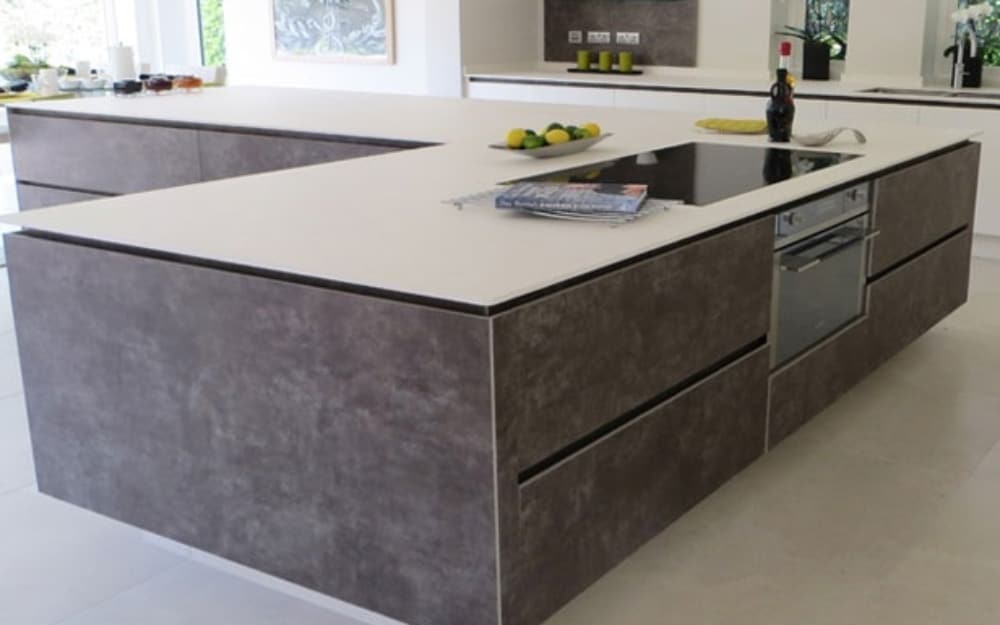
What is Sintered Stone and How is It Made
You might be wondering: What exactly is sintered stone? Manufacturers create it by mimicking natural geological formation processes, compressing what would normally be a lengthy process into just a few hours. First, they mix 100% natural minerals, including clay, feldspar, silica, and natural mineral pigments. Next, they apply extremely high pressure (typically exceeding 400 bar) to the mixture. Finally, the pressed slabs are fired in a kiln at temperatures as high as 1200°C (2190°F). This creates a permanent bond between the particles, eliminating the need for any resins or chemical adhesives.
Sintered Stone vs. Ceramic Tiles: Is There a Difference
Many professionals ask: Is sintered stone the same as porcelain? While the manufacturing principles are similar, they are not exactly the same. Porcelain use a finer clay base and are typically subjected to lower temperatures and pressures during manufacturing. Additionally, the surface texture of porcelain is often created through printing and does not extend throughout the entire thickness of the slab. In contrast, sintered stone utilize a broader range of natural mineral formulations, making them generally denser, thicker, and naturally stronger. Thus, it is better suited for heavy-duty kitchen countertops.
Why Sintered Stone Kitchen Countertops are Trending
Sintered Stone kitchen countertops are highly sought after due to their many practical advantages.First, they are available in extra-large slabs, making it easy to install seamless island countertops. Second, they offer modern ultra-matte or high-gloss finishes that replicate the luxurious look of marble while avoiding the fragility associated with natural stone. Since they contain no resin, they do not yellow when exposed to direct sunlight. As a result, designers frequently use them for both indoor kitchens and outdoor barbecue areas.
Pros and Cons of Sintered Stone Countertops
Like any building material, sintered stone have both unique advantages and certain limitations. As a trusted advisor to clients, you need a comprehensive understanding of their pros and cons to provide accurate recommendations.
What are the Advantages of Sintered Stone Countertops
When you recommend sintered stone countertops, you are essentially offering a high-performance material that combines aesthetics with durability.
Extremely high heat resistance: You can place hot pans directly on the surface. Sintered stone will not scorch, melt, or emit toxic fumes.
Scratch and stain resistance: Its non-porous structure prevents penetration by substances like wine, coffee, and grease. It also offers strong resistance to scratches from everyday kitchen knives.
UV stability: Since it contains no resins, this kind of countertop offer excellent UV stability, making it ideal for outdoor kitchens.
Ultimate hygiene: The completely non-porous surface inhibits the growth of bacteria and mold, making food preparation safer.
What is the Downside of Sintered Stone
Although it has exceptional quality, you still need to explain their processing challenges to clients and fabrication teams. The main drawback lies in their brittleness during fabrication. Because the material is extremely dense and hard, with high internal tension, using a dull blade or an inappropriate feed rate during cutting can easily lead to chipping, cracking, or shattering. Additionally, due to the higher fabrication requirements, the overall cost of sintered stone countertops is typically higher than that of traditional quartz countertops.
Are Sintered Stone Countertops a Good Choice for Long-Term Use
Yes, absolutely. As long as they are properly fabricated and installed, the sintered stone offers outstanding durability and a lifespan that exceeds that of most other countertop materials on the market. For customers seeking a permanent, maintenance-free solution capable of withstanding daily heavy-duty use, sintered stone represent an excellent long-term investment.
Sintered Stone vs. Quartz vs. Granite: Which Is Better?
Customers often want to compare sintered stone with natural stone and quartz. To help you answer such questions more clearly and quickly, we’ve compiled a concise comparison chart.
Comparison of Sintered Stone, Quartz, Granite, and Natural Stone
Material Comparison Guide
| Characteristics | Sintered Stone | Quartz | Granite |
|---|---|---|---|
| Composition | 100% Natural Minerals | 90% quartz, 10% resin | 100% Natural Stone |
| Heat Resistance | Excellent (fire-resistant) | Poor (resin burns at 300°F) | Very good |
| Stain resistance | Excellent (non-porous) | Very good (non-porous) | Moderate (requires periodic sealing) |
| UV resistance | Excellent (suitable for outdoor use) | Poor (fades in sunlight) | Very good |
| Fabrication Difficulty | High (requires a specialized diamond blade) | Low to moderate | Moderate |
Which Is Better for Kitchen Countertops?
If someone asks you, “Which is better: quartz or sintered stone?”, the answer depends on the specific application. If a client is building an outdoor kitchen or has higher heat resistance requirements, sintered stone is typically the better choice. If a client has a tight budget or needs more complex edge profiling designs, quartz may be more practical. Compared to granite, sintered stone has an advantage in terms of maintenance, as granite usually requires annual chemical sealing.
Sintered Stone Fabrication: Tools, Techniques, and Challenges
As a professional manufacturer at Z-LION, we understand that the greatest challenge with sintered stone countertops lies in the fabrication process. If you use standard granite tools on sintered stone, you are likely to damage the material, which directly erodes your profit margins.
Why Is Sintered Stone Cutting So Difficult
The difficulty in cutting sintered stone lies primarily in their extremely high density and inherent structural tension. When cutting begins, this tension can be released instantly. If the saw blade generates excessive friction or vibration, the slab may crack along the cut line. Therefore, heat and vibration must be minimized as much as possible during the cutting process.
Essential Diamond Tools for Sintered Stone Processing
To achieve stable, profitable processing, you need a highly specialized tool setup. Below is a checklist for equipping your workshop with tools for processing ultra-dense surfaces.
Diamond Blades for Cutting Sintered Stone
You cannot use standard segmented granite saw blades. Instead, choose continuous rim or closed-segment diamond saw blades designed for ceramics and ultra-dense surfaces. These blades typically use a softer metal bond, which continuously exposes sharp new diamonds, resulting in a cleaner cut and reducing the risk of chipping or edge cracking in brittle materials. Be sure to use ample water to cool the blade and reduce friction.
Grinding and Edge Profiling Tools
After cutting, the edges must be profiled. Since sintered stone edges are sharp and prone to chipping, extreme caution is required during operation. It is recommended to use high-precision CNC profiling cutters or high-quality vacuum-brazed diamond profiling wheels to remove material more smoothly and minimize the introduction of micro-cracks along the slab edges.
Polishing Pads for Sintered Stone Surfaces
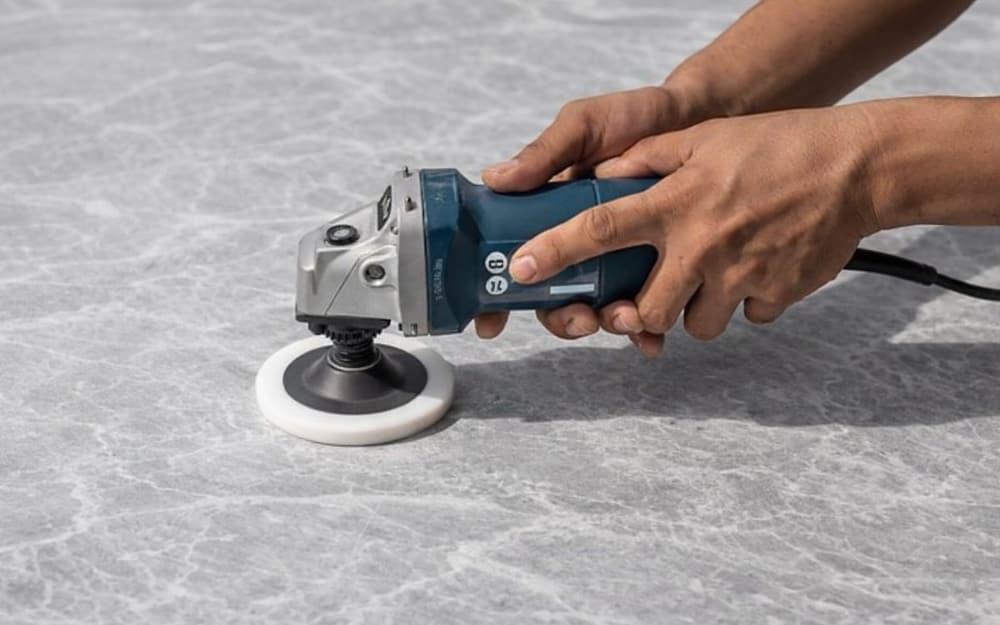
Polishing the edges of stone countertops requires patience. Standard wet pads used for marble are generally unsuitable. You need high-quality, ultra-flexible resin polishing pads specifically designed for ultra-hard materials. At Z-LION, we recommend first using fine-grit electroplated grinding pad to smooth out initial saw marks, followed by multi-step resin polishing pads to achieve a flawless, factory-grade high gloss.
Choosing the Right Fabrication Tools and Supplier
Your success depends largely on your tooling partner. You need a B2B manufacturer that truly understands the characteristics of ultra-dense surfaces. By choosing customized diamond tooling solutions from a specialized manufacturer, you can significantly reduce slab breakage rates. Investing in the right diamond belts, CNC cutters, and polishing pads enables your fabrication team to work more efficiently and produce more consistent, refined edges.
Cost Analysis for Sintered Stone Kitchen Countertops
Pricing these projects correctly is critical to your business. In addition to raw material costs, you must factor in expenses such as fabrication and installation.
How Much Do Sintered Stone Countertops Cost
Typically, the cost of raw slab material ranges from $60 to $120 per square foot. However, the total cost of a finished sintered stone countertop usually falls between $100 and $250 per square foot. The higher price range primarily stems from the need for more specialized labor and the cost of dedicated tools.
Key Factors That Affect Pricing
The following variables will influence the final quote you provide to your clients:
Sintered stone countertops thickness: Common thicknesses are 6mm, 12mm, and 20mm. 20mm slabs typically require slower cutting speeds, thereby increasing labor time.
Fabrication Complexity: Undermount sink cutouts or complex edge profiling require more specialized diamond tools and take additional time.
Installation Costs: Because sintered stone are heavy and rigid, they often require a larger handling team or specialized vacuum lifting equipment to minimize the risk of breakage during transport.
More What You Need to Know About Sintered Stone
Beyond fabrication, proper installation methods and customer education are equally critical, as they can significantly extend the project’s lifespan.
How to Install Sintered Stone Countertops
Handling methods are critical. During installation, slabs must be transported vertically. Never transport cut slabs horizontally, as they may break under their own weight. Additionally, cabinets must be kept perfectly level. Since sintered stone have almost no flexibility, installing them on uneven cabinetry creates stress points that can eventually cause the countertop to crack. Always use a flexible, high-quality adhesive to secure the slabs; avoid using rigid epoxy resins.
How to Clean and Maintain Sintered Stone Countertops
Customers will be pleased to know that cleaning and maintaining quartz countertops is very simple and does not require professional stone cleaners. For daily care, simply wipe the surface with warm water and mild dish soap. For stubborn stains or dried spills, you can safely use glass cleaner, mild bleach, or even acidic cleaners without damaging the surface. Quartz countertops also do not require any chemical sealants.
Conclusion: Find the Right Tools for Your Project
In summary, sintered stone countertops represent the future of high-end surface design, combining durability, heat resistance, and aesthetic appeal. However, as a professional, you must acknowledge their rigidity and internal tension. Attempting to make do with standard granite tools will often result in slab fractures and lost revenue. By equipping your workshop with the right continuous-edge blades and professional polishing pads, you can transform this challenging material into a high-margin product for your business.
Are you ready to eliminate chipping issues and achieve more efficient processing? Contact our sales team today to receive a customized quote for diamond blades, polishing pads, and CNC tools specifically designed for sintered stone and ultra-dense surfaces.
Frequently Asked Questions
Is sintered stone good for a countertop?
Yes, sintered stone are ideal for countertops. They are a non-porous material with excellent scratch resistance, do not fade under UV exposure, and can withstand the high temperatures of hot pots without scorching or melting.
Does sintered stone crack easily during fabrication?
Yes, if the wrong tools are used, sintered stone are prone to cracking during processing. Because the material is extremely dense and contains internal tension, specialized diamond blades must be used with slower feed rates and ample cooling water to minimize the risk of cracking.
How long do sintered stone countertops last?
Quartz countertops typically last for a very long time. Because they are unaffected by high temperatures, sunlight, stains, and daily wear and tear, they can maintain an appearance close to their original condition for years without requiring regular sealing.
Is sintered stone durable enough for heavy use?
Yes, it is durable enough to withstand daily heavy-duty use. Its high-density structure effectively minimizes chipping caused by normal impacts, and its scratch-resistant surface can handle frequent kitchen operations, making it ideal for busy residential and commercial kitchens.