English
 Português
 русский
 Chinese
 French
 Japanese
 Spanish

Introduction to Sapphire Crystal Cutting Methods
2025-11-21 09:28:46
admin
Sapphire crystals are renowned for their high hardness and optical transparency, making them highly valuable in numerous fields such as electronics, optics, and jewelry. Cutting sapphire crystals requires specialized techniques to achieve precise shapes and surface finishes. Wire cutting and laser cutting are among the most commonly used methods for cutting sapphire crystals. This article will explore these two methods, analyzing their advantages, disadvantages, and applicable scenarios.
1. Wire Saw Cutting
Wire EDM is a modern technique that uses a diamond wire wound around a metal strip, which rotates at high speed as the cutting tool. During the cutting process, abrasive powder is applied to the diamond wire, enabling it to effectively cut sapphire crystals. Wire EDM is particularly suitable for scribing along existing cracks and removing burrs generated during the cutting process.
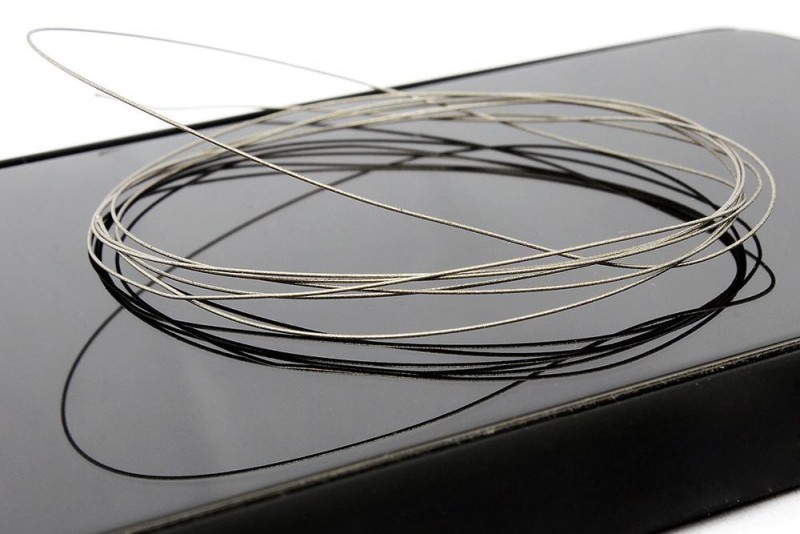
Advantages of wire saw cutting
Fast cutting speed and high efficiency: Wire sawing is known for its high-speed cutting capabilities, allowing for rapid processing of sapphire crystals. This efficiency is particularly advantageous in high-volume production environments.
Multifunctionality: This method is suitable for cutting sapphire crystals of various shapes and sizes, thus adapting to different project needs. Whether processing small gemstones or large industrial parts, wire cutting can meet a wide range of requirements.
Relatively low cost: Compared to other cutting methods, wire sawing is more cost-effective, especially considering its speed and efficiency. The ability to process multiple workpieces simultaneously can further reduce overall production costs.
Disadvantages of wire saw cutting
Excessive noise: A major drawback of wire sawing is the significant noise generated during the cutting process. This can lead to serious noise pollution, necessitating additional measures to protect workers and the surrounding environment.
Dust generation: Wire saw cutting generates a large amount of dust, causing environmental pollution. Therefore, a comprehensive dust management system is essential to mitigate this problem and ensure a safe working environment.
The cutting wire and grinding wheel need to be replaced frequently: Due to wear and tear, the cutting wires and cutting wheels used in this method need to be replaced frequently. Over time, this leads to higher operating costs, especially in high-volume production.
Applicable scenarios
Wire cutting is particularly suitable for the roughing and mass production of sapphire crystals. Its efficiency and versatility make it ideal for manufacturers looking to mass-produce sapphire components. Furthermore, wire cutting can cut various shapes and sizes, providing greater flexibility in design and application, making it the preferred method for industries such as electronics, optics, and jewelry.
2. Laser Cutting
Laser cutting is a modern, advanced technology used to cut sapphire crystals. The method involves focusing a laser beam onto the sapphire crystal, causing it to reach a high-temperature, molten state. By precisely controlling the path of the laser beam, high-precision cutting of the crystal can be achieved.
Advantages of laser cutting
High cutting precision: Laser cutting offers extremely high precision, producing smooth cut edges that typically require no further processing. This precision is particularly advantageous in applications with extremely high tolerance requirements.
Fast cutting speed and high efficiency: Laser cutting is much faster than traditional methods, allowing for rapid processing of sapphire crystals. This efficiency is highly advantageous in high-volume production environments.
Minimally minimal environmental impact: Unlike other cutting methods, laser cutting does not produce dust or noise during the cutting process. This not only creates a cleaner working environment but also reduces the need for large dust collection systems.
Disadvantages of laser cutting
High equipment investment costs: The initial investment in laser cutting equipment can be quite substantial, making it less suitable for small-batch production. Equipment costs may deter small manufacturers from adopting this technology.
Material thickness limitation: Laser cutting is primarily suitable for cutting thin, small sapphire crystals. It may be less suitable for thicker materials, which limits its application in certain industries.
Applicable scenarios
Laser cutting is particularly suitable for the fine processing and personalized production of sapphire crystal. Its high precision and efficiency make it ideal for high-end watchmaking, where complex designs and tight tolerances are paramount. Furthermore, laser cutting is frequently used in high-precision optical applications where the sharpness and quality of the cut are crucial. This method also facilitates subsequent processing of sapphire crystal products, enabling customization and refinement.