English
 Português
 русский
 Chinese
 French
 Japanese
 Spanish

Diamond Wire Saw: A New Trend in Cutting Hard and Brittle Materials
2025-08-08 10:25:38
admin
Cutting hard and brittle materials has long been a significant challenge across industries. Materials such as quartz, glass, and ceramics are extremely difficult to machine due to their high hardness and brittleness. Traditional cutting methods often fail to achieve the required efficiency, cost-effectiveness, and precision. However, advances in cutting technology, particularly the application of diamond, have significantly improved the machining of these challenging materials. Among these advancements, diamond wire saws have become a revolutionary tool in the industry.
Cutting Methods for Hard and Brittle Materials
Currently, there are three main methods for cutting hard and brittle materials: diamond circular saw cutting, band saw cutting, and wire saw cutting. Each method has its own advantages and applications:
1. Diamond circular saw cutting
Diamond circular saws are widely recognized for their high cutting efficiency and ease of operation. They are ideal for straight cuts and are commonly used in the stone and construction industries. However, they may not be as effective for complex shapes or thin materials.
2. Bandsaw cutting
Band saws are suitable for cutting larger materials and are often used in applications where a large number of cuts are required. While they are versatile, they may not be as precise as diamond wire saws, especially when working with hard and brittle materials.
3. Diamond wire saw cutting
Diamond wire saws are popular for their flexibility and narrow kerf. They are particularly well-suited for applications requiring intricate cuts and high precision. Their ability to cut complex shapes and contours makes them ideal for industries such as aerospace, automotive, and electronics.
Diamond circular saw blades
External diamond circular saw
External circular diamond saws are commonly used for cutting and slotting materials such as gemstones, quartz, ferrites, and ceramics. They typically come in diameters between 200 mm and 400 mm, making them flexible for a wide range of cutting tasks.
Advantage:
Simple structure: The design of the external diamond circular saw is simple, easy to operate and maintain.
Affordable: Blades are generally more affordable than other cutting tools and can be used in a variety of applications.
Limit:
Thick Blades and Wide Kerfs: External diamond circular saws typically have thicker blades, resulting in wider kerfs and higher material loss during the cutting process.
Insufficient Parallelism: Cut surfaces may lack parallelism, which can be a disadvantage in applications requiring high precision.
Internal diamond circular saw
The built-in diamond circular saw offers exceptional rigidity and precision. It can cut as thin as 0.1 mm, making it ideal for applications requiring high-precision slicing.
Advantage:
Excellent slicing accuracy: The internal saw achieves a thickness difference of only 0.01 mm for a 200 mm diameter wafer, ensuring precise cutting.
Flexibility: Low equipment cost, each blade can be adjusted in radial direction and thickness, and can flexibly process small batches and multiple specifications.
Limit:
Surface damage layer: Internal saws tend to produce a larger surface damage layer, which affects the cut quality.
Wider blade: A wider blade may limit its application in some situations.
Low productivity: These saws are typically limited to wafers smaller than 200mm in diameter, which can restrict their use in larger applications.
Diamond band saw blade
Diamond band saw blades are another important cutting tool, which mainly use electroplated diamond abrasives or welded diamond sintered blocks. They are known for their high cutting speed and low tool material consumption.
Advantage:
High cutting speed: Diamond band saws can achieve fast cutting speeds, making them efficient for large-scale operations.
Low noise: These saws operate at relatively low noise levels, contributing to a more comfortable working environment.
Limit:
Larger kerf: Band saws typically have a larger kerf, which results in increased material loss.
Lower cutting accuracy: They may not offer the same precision as a circular saw and are therefore less suitable for applications requiring tight tolerances.
Regularity of the material: To achieve optimal performance, the material must have a high degree of regularity, which in some cases can limit its versatility.
Diamond wire saw
Diamond wire saws are an efficient cutting method and come in three types: wire saws, diamond bead saws, and diamond wire saws. These saws use a multi-wire design to efficiently cut materials.
Advantage:
Narrow Kerf: Diamond wire saws produce narrow kerfs, minimizing material loss and maximizing yield.
Large Slicing Yield: The design allows for large slicing yields, making it cost-effective for high-volume cutting operations.
Low Cost: Diamond wire saws generally have lower operating costs compared to other cutting methods.
Limit:
Reliability Issues: The reliability of diamond wire saws can be an issue, especially in demanding applications.
Durability of electrical wires: Electrical wires have relatively low durability and may require more frequent replacement and maintenance.
Diamond Bead Saw: Advances in Cutting Technology and Versatility
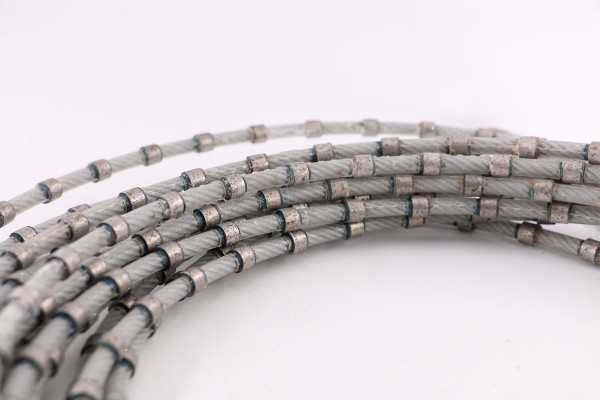
Over the past decade, diamond bead saws have experienced rapid development, becoming essential tools across a wide range of industries, particularly in stone quarrying and construction. Since their introduction in the 1970s, the application of these cutting tools has expanded beyond the demolition and renovation of concrete structures like buildings and bridges to include cutting materials such as glass.
Structure of diamond bead saw
A diamond bead saw consists of three main components:
Core: The central element that provides structural support and stability to the saw.
Diamond beads: These beads are embedded with diamond particles, which are the cutting elements that determine the saw’s ability to cut through hard materials.
Spacer: Spacers are located between the diamond beads to ensure proper spacing and alignment for efficient cutting.
The arrangement of the diamond beads on the wire core and the characteristics of the beads themselves have a significant impact on the cutting efficiency and service life of the saw.
Performance characteristics
The performance of a diamond bead saw depends primarily on the physical and mechanical properties of the diamond beads. Key characteristics include:
Cutting efficiency: The saw’s ability to cut through material quickly and efficiently.
Service Life: The lifespan of the saw before it needs replacement or maintenance.
Manufacturing method
Electroplating: This method deposits a layer of diamond particles onto a metal substrate. While electroplated diamond saw blades cut faster, they tend to wear faster, resulting in shorter tool life.
Hot Press Sintering: This method has been popular since the 1980s due to its advantages in tool life. The sintering process continuously renews the diamond abrasive, resulting in a more durable product. While sintered beads may cut slower than electroplated beads, their longer life makes them the preferred choice for many applications.
Despite advances in manufacturing technology, both methods face a common limitation: the random distribution of diamond abrasive particles, which leads to uneven cutting performance.
Application of diamond wire saw
1. Stone mining
Diamond bead saws are widely used in the stone quarrying industry to cut granite, marble, and other natural stones. Their ability to cut both straight and curved surfaces makes them ideal for quarrying stone, minimizing waste.
2. Concrete demolition and renovation
In the construction sector, diamond bead saws are used to demolish and renovate concrete structures, such as buildings and bridges. They can efficiently cut through reinforced concrete, allowing for precise and controlled demolition, reducing the risk of damage to surrounding areas.
3. Glass cutting
The versatility of diamond bead saws extends to glass cutting, enabling clean cuts across a wide range of thicknesses. This application is particularly important in the manufacture of glass products and architectural decorations.
4. Multi-bead operation
Diamond bead saws can perform multiple bead sawing operations simultaneously, especially when cutting sheet metal. This feature significantly increases productivity, making it suitable for high-volume production processes.
Limitations
Cutting kerf is wide: Due to the diameter of the beads, the cutting kerf may be relatively wide, which may not be suitable for fine cutting of delicate structures or precious materials.
Durability concerns: Despite improvements in the durability of sintered beads, the overall reliability of diamond bead saws remains a concern, especially in demanding applications.
Diamond Wire: Cutting Technology Overview
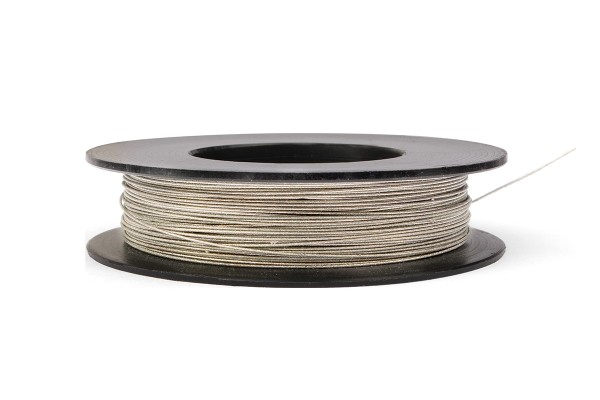
Types of diamond wire
1. Multi-wire diamond wire saw
Multi-wire diamond wire saws are designed to cut multiple workpieces simultaneously, making them ideal for high-volume production. They operate similarly to traditional wire saws and are commonly used for cutting operations.
Advantage:
Increase output: Ability to cut multiple workpieces simultaneously, significantly increasing productivity.
Narrow slit: These saws can create precise, narrow slits, making them suitable for cutting precious materials.
Perfect edge: They ensure clean edges when cutting brittle and soft materials, which is essential for applications requiring a high-quality surface finish.
Low cutting temperature: Low cutting temperature minimizes thermal damage to the material and maintains the integrity of the material.
Long service life: Multi-wire saws generally have a longer service life due to their efficient cutting capabilities.
Minimal Environmental Pollution: Its operation produces less waste and pollution than other cutting methods.
Limit:
Thread tension adjustment: The mechanism for adjusting thread tension can be complex and requires careful calibration to maintain optimal performance.
Cord length and pulley strength: These saws require a sufficient cord length and a certain degree of pulley strength to operate effectively.
2. Single-wire diamond wire saw
Single-wire diamond wire saws can be divided into two types: reciprocating and circular rotary.
Circular rotary scroll saw
Circular rotary scroll saws have a circular design and utilize a guide wheel for continuous cutting.
Advantage:
Full length cut: They can cut along the entire length of the wire, maximizing the use of the diamond abrasive.
High Cutting Speed: These saws can achieve cutting speeds of up to 10-20 m/s, making them highly efficient for a wide range of applications.
Long service life: The design helps to prolong service life compared to other cutting methods.
Limit:
Pre-cut guides: When cutting internal surfaces, pre-cut guides must be created, which increases preparation time.
3. Reciprocating diamond wire saw
The single-wire reciprocating diamond wire saw has a simple structure and strong adaptability. It can cut both internal and external surfaces.
Advantage:
Versatile cutting: They can freely change the cutting direction and tilt angle to achieve precise cutting of complex contours.
Adaptable: Its design allows it to be cut into various shapes and sizes, making it suitable for a variety of applications.
Limit:
Limited effective wire strength: Limited effective wire strength results in low wire utilization.
Lower cutting speed: Reciprocating saws typically operate at lower cutting speeds (approximately 2-3 m/s) compared to circular saws.
Application of diamond wire
Stone and marble processing: They are able to cut through hard materials, making them ideal for shaping and processing stone products.
Glass cutting: Diamond wire saws can make clean cuts in glass, which makes them valuable in the glass manufacturing industry.
Electronics manufacturing: They are used to cut silicon wafers and other delicate materials for the electronics sector.
Aerospace and automotive industries: The precision and efficiency of diamond wire saws make them suitable for cutting complex components in these high-tech industries.
In Conclusion
Diamond wire saws represent a significant advancement in cutting hard and brittle materials. With their ultra-high hardness, excellent thermal conductivity, narrow kerf, and flexibility, they address many of the challenges faced by traditional cutting methods. As industries across the globe continue to seek efficient, cost-effective, and precise solutions for machining hard materials, diamond wire saws are poised to play a key role in shaping the future of cutting technology. Their emergence not only boosts productivity but also fosters innovation across various sectors, paving the way for new applications and developments across the industrial landscape.