English
 Português
 русский
 Chinese
 French
 Japanese
 Spanish

How to Choose the Right Tile Drill Bits?
2025-02-14 11:07:04
admin
Drilling holes in the tile can be a daunting task, especially when you want to avoid cracking or damaging the tile. Choosing the right tile drill bits is essential to getting a clean, precise hole without compromising the integrity of the tile. This article will guide you in choosing the right drill bit based on the hardness of the tile and the specific requirements of your project.
Understanding Tile Hardness
Before purchasing a drill bit, it is important to assess the hardness of the tile you are drilling. Tile hardness is typically measured on the Mohs hardness scale, which ranges from 1 (softest) to 10 (hardest). Most tiles range in hardness from 4 to 8. Knowing the hardness of your tile will help you choose a drill bit that is made of the right material and has the proper gauge and shape.
Types of Tile Drill Bits
1. Tungsten carbide drill bit:
Best suited for: Tiles with a lower hardness (Mohs hardness 4-5).
Material characteristics: Tungsten steel alloy drill bits are famous for their wear resistance, corrosion resistance and high strength. Compared with other special drill bits, they are relatively cheap.
Advantage:
Cost-effective: Tungsten carbide drill bits are generally less expensive, making them ideal for DIY projects or drilling multiple holes.
Durability: These drill bits can withstand moderate wear and tear and are suitable for softer tiles.
Note: While they are effective on softer tiles, they may not be able to handle harder materials, causing the tile to darken faster and potentially damaging the tile.
2. Diamond drill bit:
Best suited for: tiles with a higher hardness (6-8 on the Mohs scale).
Material characteristics: Diamond drill bits are made of diamond particles bonded to a metal core, and have excellent hardness and wear resistance.
Advantage:
High precision: Diamond drill bits have superior cutting performance and can drill clean, precise holes without chipping or cracking tiles.
Versatile: They can be used on a variety of hard materials, including ceramic tile and glass tile, making them a versatile choice for different projects.
Safety performance: Diamond drill bits are less likely to cause tile breakage, ensuring a safer drilling process.
Note: The main disadvantage of diamond drill bits is their higher cost. However, the investment is often worth it due to their performance and longevity, especially for professional applications or large projects.
Tips for Choosing the Right Tile Drill Bits
Assess tile hardness: Use the Mohs Hardness Scale to determine the hardness of your tile. This will guide you in choosing the appropriate drill bit material.
Consider the scope of your project: If you are drilling multiple holes or working on a large project, investing in a diamond drill bit may save time and reduce the risk of damage.
Check the specifications: Make sure the bit is compatible with your drill and is appropriate for the type of tile you are working on. Look for features such as a tapered tip for easier entry and reduced risk of slips.
Follow manufacturer recommendations: Always refer to the drill and tile manufacturer's guidelines to ensure compatibility and optimal performance.
How to Drill Holes in Ceramic Tile?
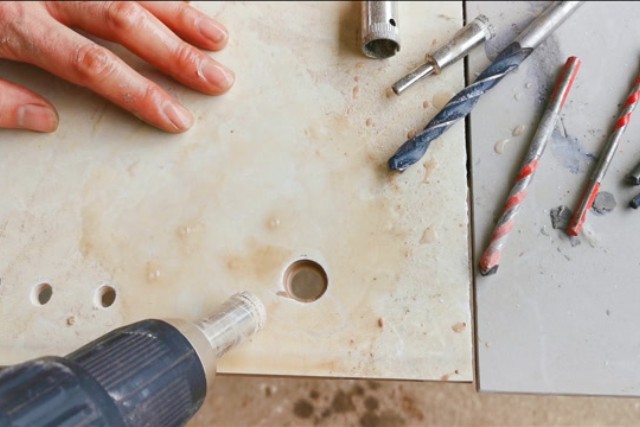
1. Preset a small hole
Before you begin drilling, it is critical to drill a small pilot hole. This step helps prevent the drill bit from slipping on the tile surface, causing cracks or unevenness in the hole.
How to operate:
Use a 5mm drill bit to gently drill a small hole at the desired location.
Apply light pressure and make sure the drill bit is perpendicular to the tile surface.
This pilot hole will act as a guide for the larger drill bit, making the drilling process smoother and more accurate.
2. Pay attention to water cooling
Drilling generates a lot of heat, especially when dealing with hard materials like tile. To mitigate this, the drill bit must be kept cool throughout the process.
How to operate:
Keep injecting water or lubricating oil into the drill bit while drilling.
This cooling method helps reduce the temperature of the drill bit, extending its life and preventing overheating.
Additionally, using coolant can help minimize porcelain chips and dust generated during the drilling process, making your workspace cleaner and safer.
3. Add appropriate pressure
Applying the right amount of pressure is essential for effective drilling. Too much pressure can cause the tile to crack, while too little pressure can result in ineffective drilling.
How to operate:
Keep the drill bit perpendicular to the tile surface while maintaining steady, moderate pressure.
If you encounter particularly hard tile, consider increasing the drill speed or adjusting the pressure slightly to facilitate the drilling process.
Finding the right balance will help you make a clean hole without damaging the tile.
4. Be safe
Safety is always your top priority when drilling. The drilling process creates sharp ceramic chips and dust that can be hazardous to your eyes and respiratory system.
How to operate:
Wear protective equipment such as goggles and masks to protect yourself from flying debris and dust.
Make sure your work space is well ventilated to minimize the inhalation of any dust particles.
By taking these precautions, you can protect yourself while working and ensure a safer drilling experience.
In Conclusion
Choosing the right tile drill bits for drilling holes in tile is essential to achieving clean, precise results while minimizing the risk of damage. By understanding the hardness of your tile and choosing the right drill bit. Taking the time to assess your needs and choose the right tools will result in better results for your tile project.
label:
diamond drill bits