English
 Português
 русский
 Chinese
 French
 Japanese
 Spanish

How to Choose the Right Diamond Wire Saw for Marble and Granite
2026-09-04 16:26:11
admin
Selecting the optimal diamond wire saw for marble and granite dictates your project's efficiency and profitability. You need the correct tool to maximize yield and minimize costly downtime. Therefore, understanding material differences is crucial for quarry owners and stone processors. This guide will help you navigate your diamond wire saw selection effectively. First, we will examine the core geological differences between stone types. Next, we will provide actionable advice for choosing the correct equipment configuration. For instance, you can explore our complete line of stone cutting diamond wire to find precise specifications for your machinery.
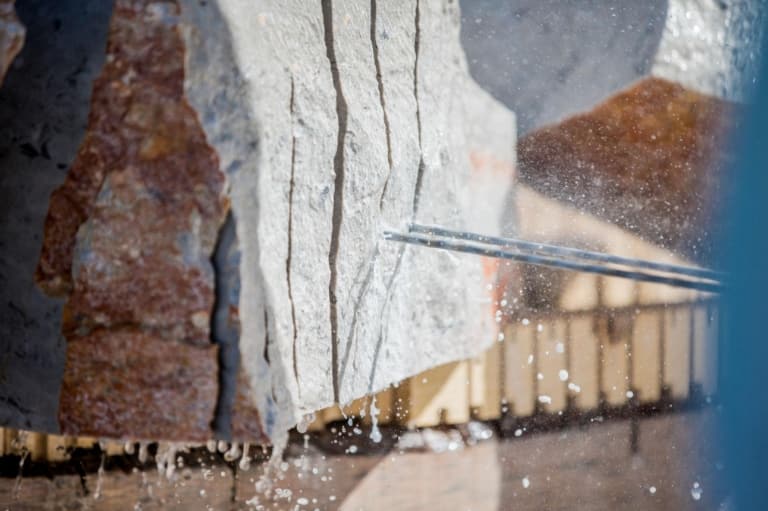
Why Marble and Granite Require Different Diamond Wire Saws
Choosing a diamond wire saw for marble and granite requires evaluating the geological makeup of the stone. You cannot use a universal approach for optimal cutting results.
Differences Between Marble and Granite
Marble is a metamorphic rock formed primarily of calcite or dolomite. Consequently, it is relatively soft and less abrasive on cutting tools. In contrast, granite is an igneous rock containing hard quartz and feldspar. As a result, granite is significantly harder and highly abrasive.
How Stone Properties Affect Diamond Wire Performance
These structural differences directly impact your diamond wire for stone cutting. Soft marble allows for much faster cutting speeds. However, hard granite demands robust bead matrices to withstand extreme friction. Therefore, matching the bond hardness to the stone prevents premature bead wear or rapid glazing.
Can the Same Diamond Wire Saw Cut Both Marble and Granite
Processing facilities often handle multiple stone types throughout the week. Thus, you might wonder if one wire can process everything efficiently.
When One Wire Can Handle Both Materials
You can occasionally use a highly versatile sintered diamond wire for both materials. For example, some custom diamond wire formulas offer a balanced metal bond. This specialized bond cuts soft granite while still managing hard marble. However, you will sacrifice peak cutting speed to achieve this versatility.
Risks of Using the Wrong Diamond Wire
Using a dedicated marble wire saw on granite leads to rapid bead destruction. The abrasive quartz will quickly erode the soft metal bond. Conversely, using a hard granite wire saw on soft marble causes the diamond beads to glaze over. As a result, the wire stops cutting entirely and tension increases. This eventually leads to dangerous wire breakage.
Spring-Type vs. Rubberized Diamond Wire: Which One Should You Choose?
The assembly structure of your diamond wire determines its application and longevity. You must select the right core protection for your specific quarry diamond wire.
Spring-Type Diamond Wire for Marble
Manufacturers construct spring-type wire by placing steel springs between the diamond beads. This design provides excellent flexibility during operation. Furthermore, it allows for better water circulation during the cut. Therefore, spring-type wire remains the industry standard for marble extraction.
Rubberized Diamond Wire for Granite
Rubberized wire features vulcanized rubber injected securely between the beads. This rubber coating protects the internal steel cable from abrasive granite slurry. Additionally, the rubber keeps the beads firmly in place under high tension. Consequently, you must use rubberized wire for granite cutting to prevent catastrophic cable failure.
Comparison Table: Spring vs. Rubberized Diamond Wire
Feature Spring-Type Wire Rubberized Wire Primary Material Marble, Limestone Granite, Sandstone Flexibility High Moderate Cable Protection Low (relies on water) High (sealed from slurry) Cost Lower Higher Cooling Requirement Standard High volume needed
Electroplated vs. Sintered Diamond Wire for Stone Cutting
The manufacturing method of the diamond bead dictates its cutting characteristics. You must choose the correct bead technology to optimize your diamond wire saw for marble and granite.
Electroplated beads feature a single layer of diamonds bonded to the steel surface. As a result, they offer exceptional initial sharpness and high cutting speeds. Therefore, electroplated wire excels in fast-paced marble quarries.
Sintered beads feature diamonds mixed consistently throughout a metal bond matrix. As the bond wears away, new diamonds emerge to continue cutting. Consequently, sintered wire provides unmatched longevity. You should explore tailored sintered diamond wire options when processing highly abrasive granite.
How to Choose the Right Diamond Wire Based on Your Application
Follow these specific guidelines to select the best diamond wire for your operational needs.
For Marble Quarrying
First, assess the marble hardness at your site. You should select a spring-type electroplated marble diamond wire for standard extraction. This combination guarantees high cutting speeds and excellent flexibility for complex block cuts.
For Granite Quarrying
Always specify a rubberized sintered granite diamond wire for quarry operations. You must prioritize cable protection and bead durability over raw cutting speed. Additionally, ensure your quarry equipment delivers adequate water flow to cool the rubber casing.
For Stone Block Squaring
Stationary squaring machines require maximum precision and stability. Therefore, you should utilize a stationary rubberized wire. This specific setup minimizes vibration and produces a perfectly flat surface for the gang saw.
For Stone Processing Workshops
Profiling and stationary machines process diverse materials daily. If you process mixed blocks, choose a versatile sintered rubberized wire. However, if you exclusively cut marble, stick to an electroplated wire for maximum daily output.
Recommended Diamond Wire Configurations for Different Stone Types
Stone Type Recommended Wire Bond Type Structure Primary Advantage Marble Electroplated Electroplated Spring Type Faster cutting Soft Granite Sintered Sintered Rubberized Balanced performance Hard Granite Sintered Sintered Rubberized Maximum durability Mixed Stone Production Sintered Sintered Rubberized Versatility and long life
Conclusion
Selecting the proper diamond wire saw for marble and granite directly impacts your operational costs. You must match the bead type and assembly structure to your specific stone. By doing so, you maximize cutting speed and prevent costly cable breakages. Proper selection ensures your operations run smoothly and profitably.
Z-Lion Diamond Technology provides highly customized solutions for global stone processing facilities. We engineer our diamond tools to match your exact machine RPM and stone hardness. Are you ready to optimize your cutting efficiency? Request a quote for specialized diamond wire tools today. Our technical experts will help you configure the perfect setup for your facility.
Frequently Asked Questions
Can one diamond wire cut both marble and granite?
Yes, you can use a specially formulated sintered rubberized wire for mixed operations. However, this setup compromises overall cutting speed. For maximum efficiency, you should use dedicated wires for each specific stone type.
Which diamond wire lasts longer?
Sintered diamond wire lasts significantly longer than electroplated wire. The sintered matrix continuously exposes new sharp diamonds as it wears down. Therefore, it provides an extended lifespan for highly abrasive materials.
What is the best diamond wire for quarry cutting?
The best quarry diamond wire depends entirely on the stone. You should use a spring-type electroplated wire for marble extraction. In contrast, you must use a rubberized sintered wire for granite extraction to protect the cable.