English
 Português
 русский
 Chinese
 French
 Japanese
 Spanish

Diamond Wire Saw: A Versatile Cutting Tool
2025-10-11 13:35:19
admin
A diamond wire saw is a highly versatile cutting tool that utilizes diamond particles as the cutting medium. Known for its efficient processing of hard and brittle materials, the diamond wire saw utilizes high-speed motion and coolant, making it an essential tool for a wide range of industries, including mining, demolition, and stone processing.
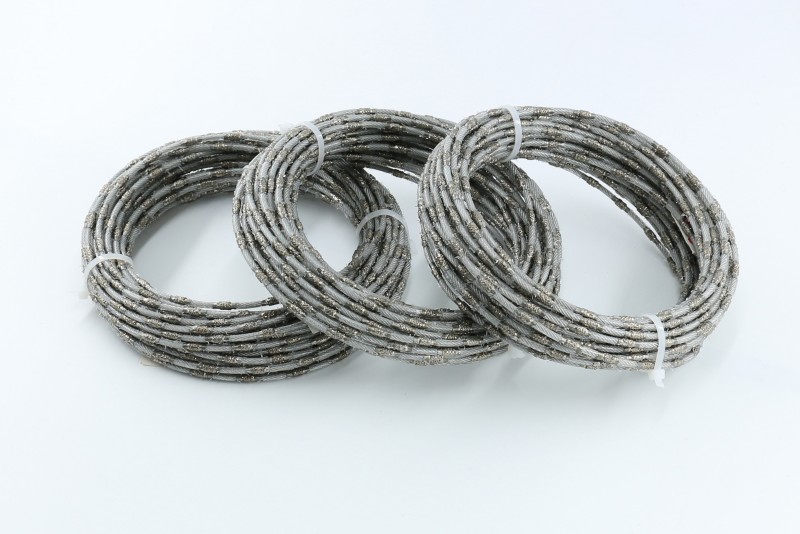
Operating Principle and Structural Features of Diamond Wire Saw
The structure of a diamond wire saw consists of three core components:
Wire rope base: The foundation of the diamond wire saw is a sturdy wire rope base, which provides the necessary tensile strength and flexibility. The base is designed to withstand the tensile and bending stresses encountered during operation, ensuring durability and reliability.
Bead units: Attached to the wire rope base, these beads contain diamond particles as the cutting medium. These beads are secured to the metal sleeve using a metal bond or electroplating process, forming wear-resistant cutting teeth. The optimized arrangement of the beads ensures a smooth cutting surface and maintains consistent efficiency during operation.
Connection structure: The connection structure connects the wire rope base and the wire traveler unit, ensuring stability and correct alignment during cutting. This structure is critical to maintaining the integrity of the saw during high-speed operation.
How it works
The operation of the diamond wire saw is driven by a power unit, which drives the wire rope to circulate. Its working principle is as follows:
High-speed motion: A power unit drives a circulating steel wire rope, bringing the diamond beads into contact with the workpiece. This contact creates an abrasive action, effectively cutting through tough materials.
Coolant application: Coolant is used during the cutting process to provide cooling, chip evacuation, and lubrication. Coolant prevents overheating, which can damage the tool or crack the material. This feature is particularly important when cutting hard and brittle materials, as it helps maintain the integrity of the tool and workpiece.
Bead arrangement: The bead arrangement is carefully designed to ensure optimal cutting performance. The spacing and concentration of the diamond particles can be adjusted based on the physical characteristics of the material being processed. For example, when cutting hard materials like granite, beads with a higher diamond concentration are often used to extend the life of the saw blade.
Application of Diamond Wire Saw
Stone mining
In the stone industry, diamond wire saws are primarily used for ore beneficiation, rough stone cutting, and stone shaping. Their high cutting precision minimizes material loss, enabling efficient mining of valuable stone resources. Capable of complex cuts and shaping, diamond wire saws are ideal for producing high-quality stone products such as slabs and tiles.
Construction
Diamond wire saws are widely used in the construction industry, particularly in the demolition of concrete structures. They enable silent demolition, minimizing vibration and noise, thereby reducing environmental impact. This feature is particularly advantageous in urban areas with strict noise regulations. Diamond wire saws are also used in bridge reconstruction and other projects requiring precise cutting of reinforced concrete.
Specialty materials processing
Beyond stone and concrete, diamond wire saws are increasingly used in specialty materials processing. They effectively cut advanced materials such as composites and ceramics, which are commonly used in aerospace and automotive applications. The flexibility of diamond wire saws allows them to adapt to non-planar cutting paths and easily handle curves and complex contours.
Archaeological excavation and art restoration
In archaeological excavations and art restoration, diamond wire saws are used to achieve precise cuts without damaging precious artifacts. Their controlled cutting ability is crucial to preserving the integrity of artifacts and ensuring the careful handling of delicate materials.
Technology Development History
The technological development of diamond wire saws is closely related to the progress of materials science and mechanical engineering. The following is a brief overview of its development:
Early cutting tools
Initially, cutting tools relied primarily on silicon carbide or traditional abrasives, which were inefficient and resulted in severe tool wear, limiting their ability to effectively cut hard materials.
Advances in synthetic diamond technology
At the end of the 20th century, significant advances in synthetic diamond synthesis technology revolutionized the cutting industry. The introduction of synthetic diamonds enabled the production of more durable and efficient cutting tools, and led to the mainstream adoption of diamond wire saws.
Improvements in manufacturing processes
The manufacturing process of diamond wire saws continues to evolve, including high-temperature sintered beads, electroplated diamond coatings, and rust-resistant wire treatments. These innovations have enhanced the durability and adaptability of diamond wire saws, making them suitable for a wider range of applications.
Automation and control systems
In recent years, developments in automated control systems have further optimized the performance of diamond wire saws. Features such as tension monitoring and adaptive feed speed adjustment improve cutting accuracy and operator safety. These advances ensure a more stable machining process, reduce the risk of tool damage, and improve overall efficiency.
Safety Precautions
Operating a diamond wire saw involves several safety precautions to ensure operator safety and workpiece integrity:
Protective equipment: Operators should always wear appropriate personal protective equipment, including goggles, gloves, and hearing protection. These equipment help protect against potential hazards such as flying debris and noise.
Coolant supply: Adequate coolant supply is crucial during the cutting process. Coolant serves multiple purposes: cooling the cutting area, removing chips, lubricating the wire, and protecting the tool and workpiece from overheating and damage.
Equipment inspection: Regular inspection of diamond wire saws is essential to ensure safe operation. Operators should check the wear of the beads and the integrity of the wire saw. Any signs of damage or excessive wear should be addressed immediately to prevent accidents or reduced cutting performance.
Proper storage: When not in use, the diamond wire saw should be stored in a dry environment away from moisture to prevent rust and corrosion. If the equipment is not used for a long time, it should be treated with anti-corrosion to protect its components.
Customized cutting parameters: The bead type and cutting parameters should be adjusted based on the material being processed. For example, a finer-grit diamond is suitable for cutting softer materials like marble, while a stronger bond is suitable for cutting harder materials like granite.
Economical Efficiency of Diamond Wire Saw
While diamond wire saws require a higher initial investment, they offer significant economic advantages over time:
Long service life: The durability of diamond wire saws means they can operate effectively for longer periods of time, requiring less frequent replacement. This long service life translates to lower overall operating costs.
Replaceable consumables: Consumables such as diamond beads and saw wire can often be replaced or repaired, further reducing costs. This feature allows the operator to maintain the performance of the saw blade without having to replace the entire tool.
High efficiency: Diamond wire saws are known for their high cutting efficiency, which can improve productivity. Their precise cutting ability and minimal material loss improve the overall economic feasibility of using these tools.
Environmental impact
The environmental impact of diamond wire saws is an important consideration, particularly in an industry focused on sustainability:
Coolant formulation: Coolants used in diamond wire saw operations should be formulated with environmentally friendly ingredients to prevent contamination of soil and water sources. This is crucial to maintaining ecological balance, especially in sensitive areas.
Noise control: Diamond wire saws generate significantly less noise than traditional demolition methods such as blasting. This reduction in noise pollution helps minimize disruption to surrounding communities and ecosystems.
Reduced dust: Unlike traditional cutting methods, diamond wire saws generate less dust, helping to maintain air quality during operation. This feature is particularly important in urban environments where dust can pose a health hazard.
Sustainable practices: Using diamond wire saws aligns with modern sustainability goals, as they offer a cleaner, more efficient alternative to traditional cutting and demolition methods. They minimize waste and environmental damage, making them a top choice for environmentally conscious projects.
label:
Diamond Wire Saw