English
 Português
 русский
 Chinese
 French
 Japanese
 Spanish

What Is the Standard Grit Size for Stone Polishing?
2025-09-26 13:03:01
admin
The standard grit size for stone polishing is crucial for achieving the desired gloss and smoothness on a stone surface. The specific grit size varies depending on the surface condition and the desired finish, but typically ranges from 120 to 3000 grit. This article will explore the concept of sandpaper grit, the standard grit range for stone polishing, and how to choose the right grit for your specific needs.
Understanding Sandpaper Grit
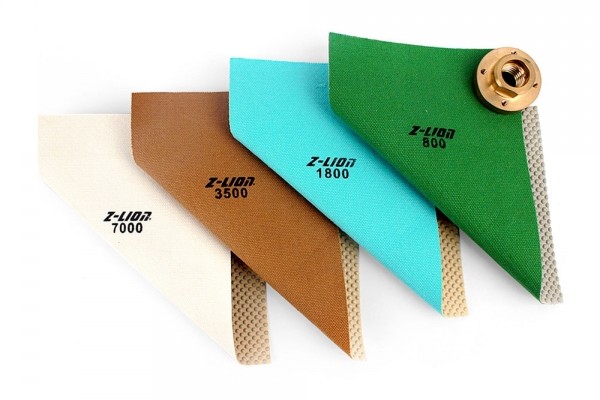
Sandpaper grit size refers to the number of abrasive particles per unit area on the sandpaper surface. Grit size is important because it determines the coarseness or fineness of the abrasive:
Low grit (Coarse): Sandpaper with a grit of 80-120 is considered coarse and is suitable for removing rough surfaces, dirt, scratches, and old paint. This type of sandpaper creates larger scratches in the surface, making it ideal for the initial polishing stage.
Higher grit (Fine): As the grit number increases, the abrasive particle size decreases. Higher grit numbers, such as 240, 400, and above, produce finer scratches, resulting in a finer polish. Grit numbers of 1000 or higher are typically used to achieve a high-gloss finish.
Standard Grit Range for Stone Polishing
When polishing stone, systematically selecting grit size is essential to achieve the best results. The following is a typical order of grit sizes used in the polishing process:
Preliminary polishing (80-120 Grit):
First use 80-120 grit sandpaper to remove rough surfaces and obvious flaws. This step is crucial for a fine polish of the stone.
Medium polish (240-400 Grit):
After the initial polishing, switch to sandpaper with a grit of 240-400. This range helps to further polish the surface in preparation for the final polishing stage.
Fine polishing (600-1000 grit):
For fine polishing, use 600-1000 grit sandpaper. This grit size enhances the gloss and smoothness of the stone surface and is suitable for most applications.
High gloss finish (1500-3000 Grit):
For stones that require a particularly high gloss, use sandpaper with a grit of 1500 or higher. This final step is crucial to achieving a mirror-like finish on the stone.
Flexibility in Grit Selection
It is important to note that the standard grit size for stone polishing is not a fixed value, but rather a flexible range. The choice of specific grit size should be adjusted based on the following factors:
Surface condition: The initial condition of the stone surface will determine the amount of starting grit. A rough surface may require a coarser grit, while a smooth surface can start with a finer grit.
Desired effect: The final appearance of the stone will also affect the choice of grit. To achieve a high gloss effect, a higher grit size is required.
Stone type: Different types of stone may work better with a certain grit size. Softer stone may require a lower grit strength, while harder stone may require a higher grit strength.
The Basis for Selecting Sandpaper Mesh
When choosing a specific sandpaper grit size for polishing stone, several factors must be considered:
Stone type:
Different types of stone have different hardness and surface characteristics. Softer stones, such as limestone or soapstone, can be polished with lower-grit sandpaper, while harder stones, such as granite or quartz, require higher-grit sandpaper.
Surface condition:
The initial condition of the stone surface is crucial in determining the appropriate sandpaper grit. For stones with rough surfaces or noticeable flaws, it’s recommended to start with a lower-grit sandpaper (80-120 grit) to effectively remove bumps and imperfections. Conversely, if the stone surface is already relatively smooth, a higher-grit sandpaper (600-1000 grit or higher) can be used for a fine polish.
Desired polishing effect:
The final look you want to achieve will also influence the grit size of your sandpaper. If you want a high-gloss finish, use finer sandpaper (1500 grit and above) to achieve a polished look.
Correct Sandpaper Usage and Techniques
In addition to choosing the right grit, correct application and technique are crucial for effective polishing:
Maintain even contact: Make sure the sandpaper maintains even contact with the stone surface throughout the polishing process. This will help achieve an even and consistent polish.
Apply moderate pressure: Apply moderate pressure when polishing. Excessive pressure will cause uneven wear of the sandpaper and may damage the stone.
Sand with the grain: When polishing, always sand with the grain of the stone to avoid unnecessary scratches and preserve the natural beauty of the material.
In Conclusion
In summary, the standard grit size for stone polishing is not a fixed value but rather a flexible range that should be adjusted based on the stone type, surface condition, and desired polishing effect. By carefully selecting the appropriate sandpaper grit size and mastering the correct application technique, you can achieve a high-quality polished stone surface, enhancing its appearance and durability. With the right technique, stone polishing can transform a rough surface into a stunning sheen, highlighting the material’s natural beauty.
label:
stone sandpaper