English
 Português
 русский
 Chinese
 French
 Japanese
 Spanish

How to Choose the Right Flexible Diamond Sanding Pads?
2025-07-18 10:38:05
admin
When grinding and polishing various stone materials, choosing the right flexible diamond sanding pads is essential to achieve the best results. Different stones have unique hardness and structural characteristics, so the right grinding pad needs to be selected according to the specific stone type. This article will guide you to choose the right flexible diamond sanding pads.
How to Choose the Right Flexible Diamond Sanding Pads?
1. Choose the right mat according to the stone type
Marble
Features: Marble is relatively soft, has a fragile surface, and is prone to scratches and excessive wear.
Recommended pad:
Grit: Choose a flexible diamond sanding pad with a finer grit. This will help avoid damaging the surface while still allowing for effective grinding and polishing.
Use water: Since marble is porous and easily absorbs stains, please make sure to provide enough water during the grinding process. This will help prevent the stain from penetrating further and maintain the integrity of the stone.
Granite
Features: Granite is harder and more wear-resistant than marble and requires a different approach to grind effectively.
Recommended pad:
Preliminary Grinding: Start with a coarser flexible diamond pad for preliminary grinding. This helps remove heavy damage and uneven areas on the surface.
Subsequent steps: After initial grinding, switch to medium and fine grit polishing pads for further leveling and polishing. This two-step process ensures a smooth surface while addressing the high wear rate of polishing pads due to the hardness of granite.
Replacement: Closely monitor the wear rate of your abrasive pads as they may need to be replaced more frequently when working with granite.
Terrazzo
Features: Terrazzo is an artificial stone whose hardness and wear resistance are between marble and granite.
Recommended pad:
Surface condition: Choose the appropriate particle size according to the surface condition of the terrazzo. If the surface is relatively flat, you should focus on removing surface stains and restoring the gloss.
Grit: Generally speaking, medium and fine grit flexible diamond sanding pads are suitable for terrazzo. These sandpapers are effective at cleaning the surface and enhancing its gloss without causing damage.
2. Choose according to grinding requirements
Coarse grinding
Purpose: Rough grinding is usually used to remove deep scratches, wear layers or uneven parts of the stone surface.
Recommended pad:
Grit: Choose a coarser grit flexible diamond sanding pad. These pads have larger abrasive particles, which can remove more material quickly, significantly improving grinding efficiency.
Tips: When using a coarse sanding pad, be sure to control the grinding pressure and speed. Too much pressure may damage the stone surface, so it is important to find a balance that effectively removes material without compromising the integrity of the stone.
Fine grinding and polishing
Purpose: Fine grinding and polishing are necessary to restore the gloss and texture of the stone surface, achieving a smooth and reflective surface.
Recommended pad:
Grit: Choose a finer grit flexible diamond sanding pad. These pads contain smaller abrasive particles that can finely grind the surface of the stone, resulting in a smoother, flatter surface.
Tips: When fine grinding and polishing, always ensure uniformity and stability in the grinding process. This helps avoid local scratches or inconsistent gloss. Using water or lubricants can also help reduce friction and enhance the polishing effect.
Local fixes
Purpose: Targeted repairs are required for local damage to the stone surface, such as small scratches or pits.
Recommended pad:
Size: Choose a small size flexible diamond pad for precise local repairs. These pads allow precise sanding of specific areas without affecting the surrounding surface.
Tips: Choose the appropriate grinding wheel size according to the degree of local damage. For minor scratches, a finer grinding wheel size may be sufficient; for deeper pits, a coarser grinding wheel may be required for preliminary removal.
3. Consider the quality of the grinding disc
High quality abrasive
The abrasive used in a sanding pad is a key component that determines its performance. High-quality diamond abrasives should have the following characteristics:
High purity: The purity of diamond abrasive affects its cutting efficiency. High purity diamonds perform better, removing material faster and producing smoother surfaces.
Uniform particle distribution: The uniform distribution of abrasive particles ensures uniform wear and efficient grinding over the entire disc surface. This uniformity helps maintain stable grinding performance throughout the life of the disc.
Strong wear resistance: High-quality diamond abrasives are durable, stable in performance and not easy to wear. This wear resistance enables the abrasive disc to maintain its grinding effect for a long time, reducing the need for frequent replacement and ensuring cost-effectiveness.
Good substrate flexibility
The substrate of the flexible diamond grinding pad plays a vital role in its overall performance. A high-quality substrate should have the following characteristics:
Moderately flexible: The substrate should be flexible enough to conform to the contours of the workpiece, ensuring adequate contact between the pad and the surface. This adaptability is especially important when working with irregular shapes or curved surfaces.
Sufficient strength: While flexibility is important, the substrate must also be strong enough to withstand the stress of grinding without breaking or deforming. A well-balanced substrate provides the necessary support while ensuring effective grinding.
Strong adhesive
The function of the bond is to firmly attach the diamond abrasive to the backing material. The quality of the bond significantly affects the performance and service life of the sanding pad:
Strong adhesion: High-quality adhesive ensures that the diamond abrasives are firmly attached to the substrate during use. This prevents the abrasives from falling off, which can lead to inconsistent grinding results and increased wear on the grinding pad.
Durability in various conditions: The adhesive should maintain its effectiveness under different working conditions, including changes in temperature, humidity, and pressure. A strong adhesive helps extend the life of the sanding pad, making it a more cost-effective choice in the long run.
Other notes
When choosing a flexible diamond grinding pad, consider these additional factors:
Compatibility with equipment: Make sure the sanding pad is compatible with the sanding equipment you plan to use it with. This compatibility will help maximize the effectiveness of the sanding pad and improve overall sanding performance.
Manufacturer reputation: Choose a reputable manufacturer known for producing high-quality diamond sandpaper pads. Researching customer reviews and testimonials can provide insight into a particular product’s performance and reliability.
Cost vs. quality: While it may be tempting to choose the low-cost option, investing in a high-quality flexible diamond sanding pad can give better results and reduce overall costs because you can change it less frequently and grind more efficiently.
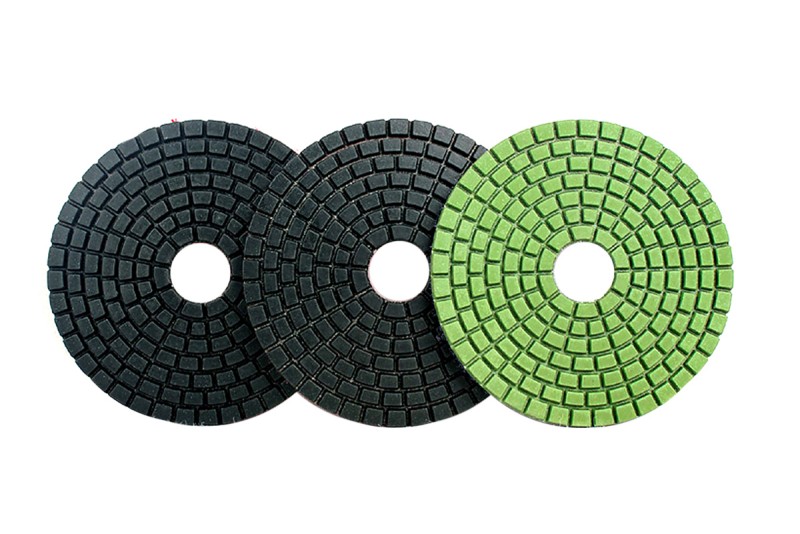
Tips for using flexible diamond sanding pads
Correct grinding method
1. Classification grinding
What is graded grinding?
Graded grinding involves using a series of sanding pads with different grit sizes to achieve the best results. This method allows for systematic surface preparation and polishing.
Grading grinding steps:
Start with a coarse grit: Start grinding with a coarse grit pad. This pad is designed to remove heavy damage, deep scratches, and uneven areas on the surface of the stone. The coarse grit will quickly eliminate imperfections and lay the foundation for a finer grind.
Transition to medium-fine pads: After repairing major imperfections with coarse pads, switch to medium-fine pads, and then to fine pads. Each time you switch to a new pad, you can further refine the surface, remove any remaining imperfections, and improve the overall result.
Ensure uniformity: At every stage of sanding, it is critical to maintain uniformity and consistency across the entire surface. This helps avoid visible marks or unnatural transitions between different grit grades, resulting in a more professional finished result.
2. Maintain even pressure
Why is even pressure important?
Maintaining consistent pressure during the grinding process is essential to achieving the best results. Uneven pressure can lead to a variety of problems, including excessive wear on the sanding pad and damage to the stone surface.
Tips for maintaining even pressure:
Adjust to spec: The pressure applied should be adjusted according to the specifications of the sanding pad and the hardness of the stone being sanded. Generally speaking, moderate and steady pressure is ideal for most applications.
Avoid excessive pressure: Excessive pressure can cause the sanding pad to wear out quickly and even damage the stone surface. This may cause unwanted scratches or uneven surfaces.
Prevent insufficient pressure: On the contrary, applying too little pressure will affect grinding efficiency, resulting in longer working time and insufficient material removal. Strive to achieve a balance that can grind effectively without compromising the integrity of the surface.
3. Control grinding speed
Importance of grinding speed
Controlling the grinding speed is critical to both the life of the sanding pad and the quality of the final product. The right speed can increase efficiency while minimizing the risk of damage.
Guidelines for controlling grinding speed:
Avoid high speed: Too high a speed will increase the friction between the sanding pad and the stone, causing overheating. This will not only shorten the life of the sanding pad, but also cause thermal damage to the stone surface.
Be careful with slow speed: Although slow speed may seem safer, it can significantly reduce grinding efficiency and increase work time. It is important to find a balance that allows for efficient material removal without compromising surface quality.
Recommended speed: Generally speaking, medium speed is recommended for most grinding applications. This speed allows for efficient grinding while minimizing the risks associated with high and low speeds.
Precautions for wet grinding operation
1. Stay hydrated
Importance of water: Adequate water is critical in the grinding process as it provides cooling and lubrication for the grinding disc. Insufficient water can lead to overheating, which can damage the grinding pad and stone surface.
Tip:
Regular checks: Continuously monitor the water level during grinding. Make sure there is always enough water to keep the grinding discs cool and prevent dust from flying.
Add water in time: If you find the water level is low, please add water in time to maintain optimal grinding conditions. This helps prevent excessive wear on the grinding disc and ensures consistent performance.
2. Prevent water stains
Aesthetic Considerations: While hydropolishing is effective in reducing dust, too much water can leave stains on the stone surface, affecting its appearance.
Tip:
Clean up after grinding: After grinding, please immediately remove any remaining water from the stone surface. Wipe or dry the area with a clean rag or absorbent device.
Special considerations for porous stones: Stones that absorb water, such as marble, need to be especially careful to prevent water from penetrating the surface. Long-term use can cause discoloration or damage to the stone. Make sure all moisture is removed to maintain the beauty of the stone.
3. Pay attention to the cleanliness of water
Effect of dirty water: When using water during grinding, dust and impurities will mix in and make it turbid. Using dirty water will clog the grinding disc and affect the grinding quality.
Tip:
Regular water changes: Change the water regularly to keep it clean and free of contaminants. This helps maintain the effectiveness of the grinding process and prevents the grinding disc from clogging.
Use clean water: Always use clean water during grinding operations. This will ensure that the grinding discs operate efficiently and that the stone surface is not affected by impurities.
Conclusion
In summary, choosing the right flexible diamond sanding pads and mastering the correct usage skills are the key to ensuring effective and high-quality stone grinding. By deeply understanding the characteristics of the stone, the performance of the grinding disc and the actual grinding needs, you can accurately select the appropriate grinding disc product. At the same time, following scientific usage methods and maintenance recommendations can not only extend the service life of the grinding disc, but also ensure that the stone surface achieves the ideal grinding effect.