English
 Português
 русский
 Chinese
 French
 Japanese
 Spanish

The Difference Between Polished and Unpolished Terrazzo Floors
2025-04-30 13:11:44
admin
Terrazzo flooring has long been admired for its durability and beauty, its practicality and artistic appeal. Terrazzo is made from a mixture of cement, marble aggregate, quartz sand, and pigments, and goes through a series of processes including mixing, pouring, and finishing. One of the main differences in terrazzo flooring is the polished and unpolished finishes, each of which offers unique characteristics and benefits.
The Concept of Polished and Unpolished Terrazzo Floors
What is terrazzo?
Terrazzo is a composite material that has been used in a variety of building applications for centuries. It is versatile and can be used in residential, commercial and industrial settings. The process of making terrazzo involves mixing cement, aggregates (such as marble chips or quartz) and pigments to achieve the desired color and texture. Once poured, the surface is ground and finished to create a smooth, durable floor.
Polished terrazzo floor
Definition:
Polished terrazzo floors are ground and buffed to a smooth, shiny surface. This process brings out the beauty of the mix and pigments, enhancing the visual appeal of the floor.
Feature:
Smooth surface: The polishing process removes imperfections and creates a flat, even surface that is easy to clean and maintain.
High gloss: Polished terrazzo floors have light-reflecting properties that can brighten a space and enhance its overall beauty.
Durability: The polishing process not only improves the appearance, but also increases the wear resistance of the floor, making it suitable for high-traffic areas.
Stain resistance: The polished surface has a lower porosity which helps to resist stains and spills, making it ideal for environments such as restaurants, schools and hospitals.
Unpolished terrazzo floor
Definition:
Unpolished terrazzo floors retain the natural grain and roughness of the stone surface. This effect is achieved by stopping the grinding process before the surface is sanded and polished.
Feature:
Textured surface: Unpolished terrazzo has a more tactile feel, with visible aggregate providing a rustic, natural look.
Matte effect: The lack of polish results in a matte effect, which can create a softer and earthy aesthetic.
Non-slip: The rough surface of unpolished terrazzo allows for better traction, making it a safer choice for areas prone to moisture or spills.
Lower maintenance: While unpolished surfaces may require more frequent cleaning to remove dirt and debris, they are less susceptible to scratching and are easier to repair if damaged.
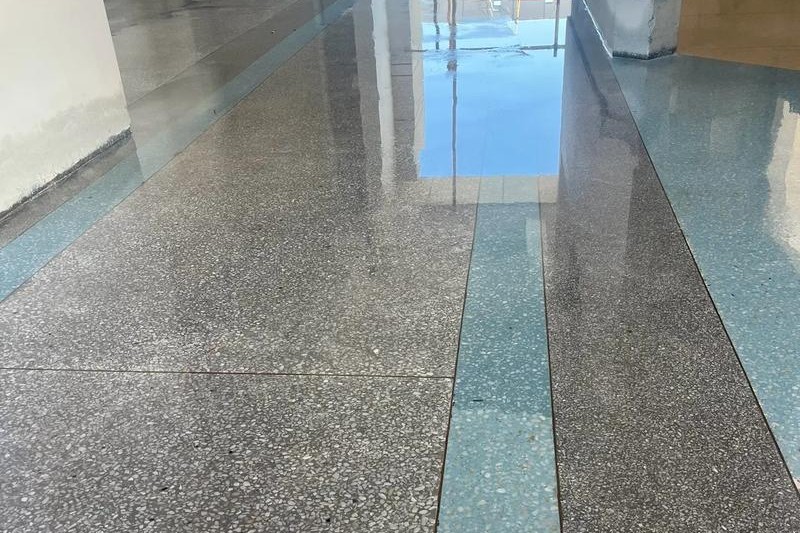
The Difference Between Polished and Unpolished Terrazzo Floors
1. Appearance
Polished terrazzo floor:
The most notable difference between polished and unpolished terrazzo floors is appearance. Polished terrazzo has a smooth, glossy surface that enhances the colors and textures of the mix. The polishing process brings out the vibrancy of the pigments and creates a reflective effect that illuminates the space and adds a touch of elegance.
Unpolished terrazzo floor:
In contrast, unpolished terrazzo floors retain a rougher, more natural look. The surface is more textured, showing off the texture of the aggregate. This finish emphasizes the raw beauty of the material used, creating a rustic, natural aesthetic that appeals to those seeking a more natural look.
2. Texture and wear resistance
Polished terrazzo floor:
Polished terrazzo has a smooth and fine texture, which provides a more delicate feel underfoot. This smoothness not only enhances comfort, but also increases the floor's wear resistance. The polished surface is less susceptible to scratches and damage, making it ideal for areas with high foot traffic. The reduced friction also means that polished terrazzo is less likely to show signs of wear over time.
Unpolished terrazzo floor:
On the other hand, unpolished terrazzo has a relatively rough surface that is less pleasant to walk on. This texture can feel rough and wear more over time, especially in high-traffic areas. Rough surfaces are also more susceptible to damage from heavy objects or abrasive materials.
3. Maintenance
Polished terrazzo floor:
One of the great benefits of polished terrazzo floors is that they are easy to maintain. Their smooth, fine surface resists the accumulation of dust and dirt, making them very easy to clean. Regular sweeping and occasional mopping are usually enough to maintain the clean appearance of polished terrazzo. In addition, the non-porous nature of the polished surface helps to resist stains, further simplifying maintenance.
Unpolished terrazzo floor:
In contrast, unpolished terrazzo floors are more difficult to maintain. The rough surface tends to collect dust, dirt, and debris, and is more susceptible to collecting dirt. Cleaning unpolished terrazzo generally requires more effort because its texture tends to attract particles that are difficult to remove. Regular maintenance may require a more thorough cleaning method to ensure the surface remains clean and looks its best.
Suitable Places for Polished and Unpolished Terrazzo Floors
1. Polished terrazzo floor
Applicable environment:
Polished terrazzo flooring has an elegant appearance and smooth surface, making it an ideal choice for high-end interior floor decoration. Here are some specific applications:
Commercial spaces: Polished terrazzo is often used in retail stores, offices, and showrooms where a sophisticated look is desired. Its reflective surface enhances lighting and creates a warm atmosphere for customers and clients.
High-end homes: Homeowners who want to elevate the aesthetic of their living spaces often choose polished terrazzo for areas like living rooms, dining rooms, and entryways. The shiny surface adds a touch of luxury and complements a variety of interior design styles.
Hotels and restaurants: In hotels, polished terrazzo is often used in lobbies, corridors and guest rooms. Its durability and easy maintenance make it a practical choice for high-traffic areas, while the polished surface creates a warm and comfortable atmosphere.
Cultural and public buildings: Museums, galleries and government buildings often feature polished terrazzo floors to create a sophisticated, professional environment. The material’s ability to withstand heavy foot traffic while maintaining its aesthetic appeal makes it a perfect fit for these venues.
2. Unpolished terrazzo floor
Applicable environment:
Unpolished terrazzo floors are more suitable for industrial and outdoor applications due to their durability and anti-slip properties. Here are some specific uses:
Industrial environments: Unpolished terrazzo is often used in factories, warehouses, and production facilities with heavy machinery. The rough surface has better traction and is less susceptible to wear due to heavy loads.
Parking lots and garages: Unpolished terrazzo is durable and stain-resistant, making it ideal for parking lots and garages. The rough texture helps prevent slipping, ensuring the safety of vehicles and pedestrians.
Outdoor spaces: Unpolished Terrazzo can be used in outdoor locations such as patios, walkways, and pool decks. Its weather and abrasion resistance make it ideal for outdoor settings.
Utility areas: In commercial buildings, unpolished terrazzo is often used in utility areas, such as storerooms and service corridors, where aesthetics are less of a concern but durability and ease of maintenance are priorities.
Pricing Considerations
When it comes to pricing, polished terrazzo floors typically require a more complex surface preparation process, so the cost will be higher than unpolished terrazzo floors. The polishing process involves multiple steps, including grinding, honing, and buffing, which requires specialized equipment and skilled workers. Therefore, the price of polished terrazzo can be much higher, reflecting the additional labor and material costs.
In contrast, unpolished terrazzo flooring is less expensive to install and maintain, making it a more cost-effective option for projects with a limited budget. The simpler installation process and lower material costs make unpolished terrazzo more affordable overall.
In Conclusion
The choice between polished and unpolished terrazzo flooring ultimately comes down to the specific needs and aesthetic preferences of the space. Polished terrazzo offers a sleek, elegant look, is durable, and easy to maintain, making it a great fit for high-traffic commercial environments and modern residential settings. In contrast, unpolished terrazzo has a more natural, rustic look that emphasizes texture and an organic beauty, appealing to those who prefer a traditional or earthy aesthetic.
Understanding the differences between these two finishes can help homeowners, architects, and designers make an informed decision when choosing terrazzo flooring for their projects. Whether you choose the lustrous elegance of polished terrazzo or the raw charm of unpolished terrazzo, both options will remain beautiful and functional for years to come.